
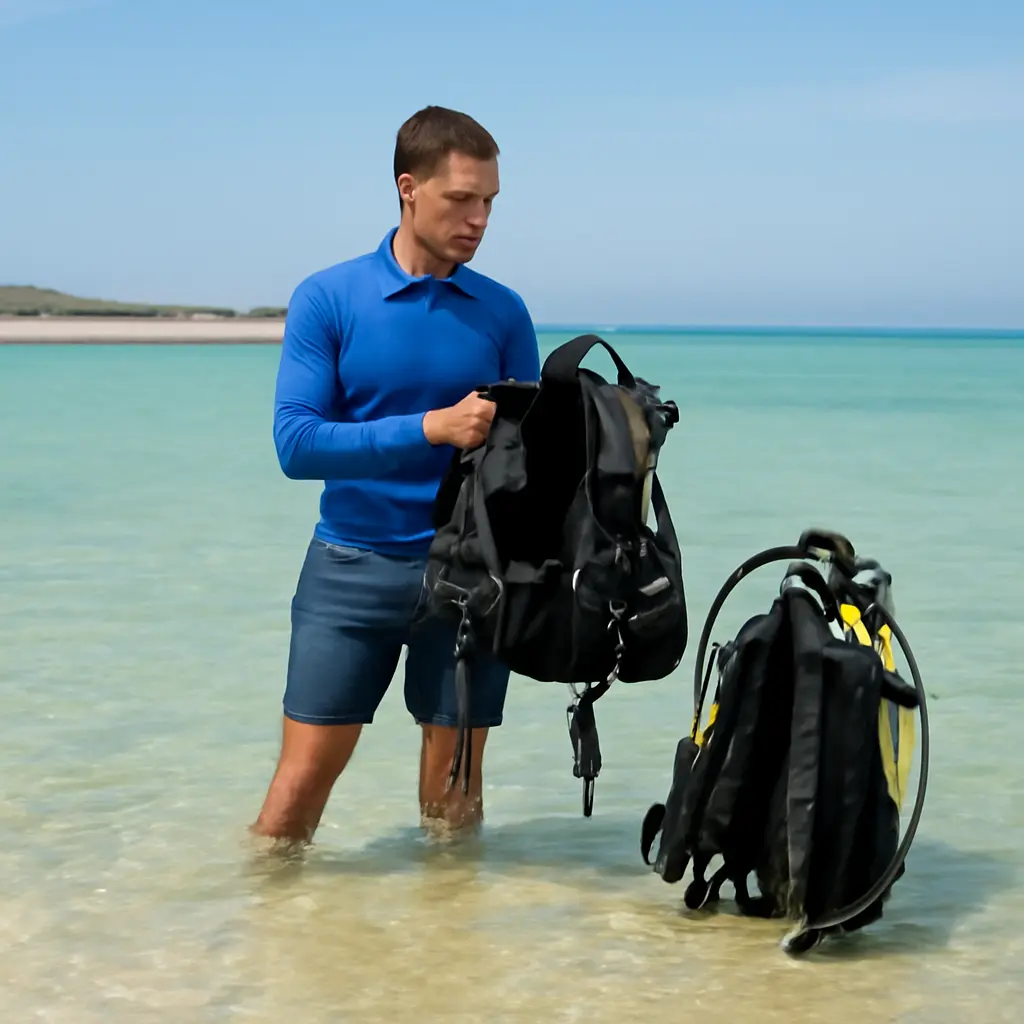
Scuba diving is underwater breathing using a self-contained supply of compressed gas, and for beginners it is generally manageable with professional instruction, practice, and respect for safety procedures—not effortless or risk-free. A beginner course typically combines classroom or online learning, confined-water practice, and open-water dives; the challenge often lies less in swimming than in staying calm, controlling buoyancy, equalizing pressure, and following procedures. Training standards, medical screening, and accident data help explain what makes diving difficult, how difficulty varies, and how new divers can prepare.
Scuba Diving Difficulty Depends on Skills, Conditions, and Training
Scuba diving difficulty is the combination of physical effort, equipment management, underwater skills, environmental conditions, and decision-making required to dive safely. The Professional Association of Diving Instructors (PADI) and other training agencies teach these elements progressively, beginning in a controlled setting before students move to open water. There is no single difficulty rating: a calm, shallow training dive differs substantially from a cold-water dive with currents, poor visibility, or a demanding entry.
For many healthy beginners, the basic skills are achievable, but they require focused practice. Divers must breathe continuously, monitor their air supply and depth, communicate with hand signals, and stay close to a buddy. The U.S. National Park Service emphasizes that divers should match their plans to their training and experience. That principle connects the learning curve to the conditions in which a beginner chooses to dive.
Physical demands are usually manageable but relevant
Recreational scuba is not normally a race or an endurance swim: divers move slowly and use fins, while buoyancy control helps limit exertion. However, carrying equipment on land, entering or exiting the water, swimming against current, and managing cold can be strenuous. Basic comfort in water and the ability to complete the training agency’s required swim and flotation assessments are important; exact requirements vary by course and agency.
Divers Alert Network (DAN), a nonprofit diving-safety organization, advises divers to consider health conditions and fitness because cardiovascular problems, breathing difficulties, and some medications can affect diving risk. Fitness does not guarantee safety, and a person need not be an elite athlete to learn. Beginners should answer medical questionnaires honestly and consult a qualified clinician familiar with diving medicine if a screening answer indicates further evaluation.
Mental workload can feel harder than the swimming
A new diver must pay attention to several tasks at once: breathing, buoyancy, depth, equipment, and communication. This divided attention can feel unfamiliar, especially during early sessions. Slow breathing, staying near the instructor or buddy, and practicing one skill at a time reduce the workload. Feeling nervous is not evidence that someone cannot dive; it is a reason to pause, communicate, and proceed only when comfortable.
Conditions change the difficulty substantially
Visibility, temperature, current, waves, depth, and entry method all influence how demanding a dive feels. Clear, warm, sheltered water usually makes it easier to observe the instructor and manage equipment than cold or low-visibility water. A current can increase exertion and complicate navigation, while cold can distract a diver and shorten practical comfort time. Beginners should choose conditions within their training and avoid treating a certification as proof of readiness for every environment.
Beginner Scuba Training Builds Difficulty in Stages
Entry-level scuba training is designed to move from knowledge to supervised practice and then to open-water application. PADI describes its Open Water Diver course as including knowledge development, confined-water sessions, and four open-water training dives; other recognized agencies use comparable staged approaches, though details differ. The sequence matters: students learn equipment and core procedures before applying them in a natural setting.
Knowledge development introduces essential rules
The academic portion covers pressure, buoyancy, dive planning, equipment, communication, and safe ascent practices. Students learn why divers should never hold their breath while ascending and why depth and time affect gas use and decompression risk. Completing lessons before entering the water helps beginners recognize what to do and why, rather than trying to memorize procedures under stress.
Confined-water practice develops basic control
Confined-water sessions take place in a pool or similarly controlled environment. Students practice assembling and checking equipment, clearing a mask, recovering a regulator, and controlling buoyancy under an instructor’s supervision. These skills may feel awkward at first because breathing through a regulator and moving while neutrally buoyant are new sensations. Repetition in a predictable setting makes later open-water practice less demanding.
Open-water dives test skills in real conditions
Open-water training applies learned skills in a lake, quarry, sea, or other suitable natural site. Waves, temperature, visibility, and unfamiliar surroundings add complexity, so instructors select conditions appropriate for the course and student ability. A student who needs more time can ask for additional practice; finishing a course should mean meeting its performance standards, not merely completing a set number of sessions.
Core Scuba Skills Explain What Beginners Find Difficult
The most noticeable beginner challenges are closely related: breathing and equalization affect comfort, while buoyancy and equipment handling affect control. Learning these skills transforms diving from a collection of unfamiliar tasks into a more coordinated routine. Training agencies and instructors assess skills in water because textbook knowledge alone cannot demonstrate practical control.
Buoyancy control takes repetition
Buoyancy is a diver’s tendency to rise, sink, or remain suspended in the water. Divers adjust it using their buoyancy-control device, breathing, and appropriate weighting. Beginners commonly move up and down while learning, which can make depth control and finning feel difficult. Small adjustments and relaxed breathing are more effective than large, hurried changes; an instructor can help check weighting and trim.
Pressure equalization requires attention
As a diver descends, increasing water pressure can create discomfort in air spaces such as the ears and sinuses. Divers learn to equalize early and often using a method suitable for them, and to descend slowly. Pain is a signal to stop and ascend slightly rather than force the descent. People with congestion or difficulty equalizing should not push through discomfort and should seek professional advice when needed.
Regulator breathing and mask skills become familiar with practice
A regulator supplies breathing gas from the cylinder, while the mask allows underwater vision. Breathing through a regulator can feel unusual initially, and a mask may admit water or fog. Training includes recovering a regulator and clearing water from a mask so a diver can respond calmly to common problems. Beginners should practice until these tasks feel controlled rather than rushing because other divers appear more comfortable.
Equipment checks and buddy communication are essential routines
Scuba equipment includes a cylinder, regulator, buoyancy-control device, exposure protection, mask, fins, and instruments. A pre-dive check helps confirm that equipment is assembled and functioning, while buddy checks provide a second set of eyes. Underwater, divers use agreed hand signals and monitor one another. These routines may seem procedural on land, but they reduce the chance that a small oversight becomes a problem underwater.
Scuba Risks Are Manageable but Never Zero
Scuba diving has real hazards, including drowning, barotrauma, decompression illness, and problems related to gas supply or environmental conditions. DAN’s annual diving-incident analyses examine fatalities and contributing factors, but incident counts should not be read as a beginner’s individual probability: they combine different countries, diver populations, conditions, and reporting systems. The practical takeaway is to use training, conservative planning, functioning equipment, and a capable buddy rather than relying on statistics to promise safety.
Training limits and conservative planning reduce exposure
A beginner certification permits diving only within the limits of the diver’s training, experience, and local rules. New divers should stay with a qualified buddy, follow the dive plan, monitor air and depth, and end the dive with an adequate reserve. Deeper, overhead, technical, and challenging-current dives require additional preparation; a beginner should not attempt them simply because they have seen them online or accompanied an experienced diver.
Health screening and fitness matter
Diving can place demands on circulation and breathing, and some conditions may increase risk or require medical clearance. DAN and training agencies recommend that prospective divers disclose relevant health history and follow the course medical-screening process. A medical professional with appropriate diving knowledge can assess individual circumstances; general advice cannot determine whether a particular person is fit to dive.
Incidents show why calm decisions matter
Diving-safety reviews often describe incidents involving multiple contributing factors rather than one isolated mistake. Stress, poor planning, equipment issues, adverse conditions, or delayed responses can combine. For beginners, this supports a simple rule: stop, signal, and seek help when something feels wrong. Divers should also know local emergency procedures and how to contact emergency medical services before entering the water.
How Beginners Can Make Scuba Diving Easier
Preparation lowers the learning burden without eliminating the need for instruction. Choosing a reputable instructor, asking questions, and practicing at a comfortable pace make the first dives more manageable. A calm, shallow site with suitable conditions is usually a better first experience than a crowded or demanding destination.
- Choose a recognized training agency and a qualified instructor, and confirm what the course includes.
- Read course materials before water sessions so basic concepts are familiar.
- Tell the instructor about anxiety, health concerns, or difficulty with a particular skill.
- Use properly fitted equipment and ask for help adjusting it.
- Do not dive while ill, significantly congested, or uncomfortable with the conditions.
- Practice buoyancy and core skills in supervised settings, and request extra time when needed.
- After certification, continue with easy dives and build experience gradually.
A useful beginner progression is to master skills in a pool or confined-water session, complete open-water training in mild conditions, and then repeat uncomplicated dives with a responsible buddy. This is not a universal schedule: conditions, course standards, and individual learning needs vary. The instructor’s assessment and the diver’s own comfort should guide progression.
Conclusion: Beginner Scuba Diving Is Learnable, Not Casual
Scuba diving difficulty depends on physical comfort, mental workload, underwater skills, environmental conditions, and training. Staged instruction helps beginners learn knowledge, practice in confined water, and apply skills in open water. Buoyancy, equalization, regulator and mask use, equipment checks, and buddy communication are common learning challenges, while medical screening and conservative choices help manage risk.
For many people, scuba is approachable when taught by a qualified instructor and practiced within appropriate limits. It is not risk-free, and certification does not make every dive suitable. Prospective divers should review a recognized beginner course, complete its health screening honestly, and choose a calm first-dive environment. For further guidance, consult a training agency, a diving-medicine professional when indicated, and current safety resources from Divers Alert Network.
Sources: Professional Association of Diving Instructors (PADI), Open Water Diver Course, https://www.padi.com/courses/open-water-diver; Divers Alert Network, Annual Diving Report, https://dan.org/research-reports/research-studies/annual-diving-report/; Divers Alert Network, Medical Resources, https://dan.org/health-medicine/medical-resources/; U.S. National Park Service, Scuba Diving Safety, https://www.nps.gov/subjects/oceans/scuba-diving.htm; World Recreational Scuba Training Council, Recreational Scuba Training Council Standards, https://wrstc.com/


