
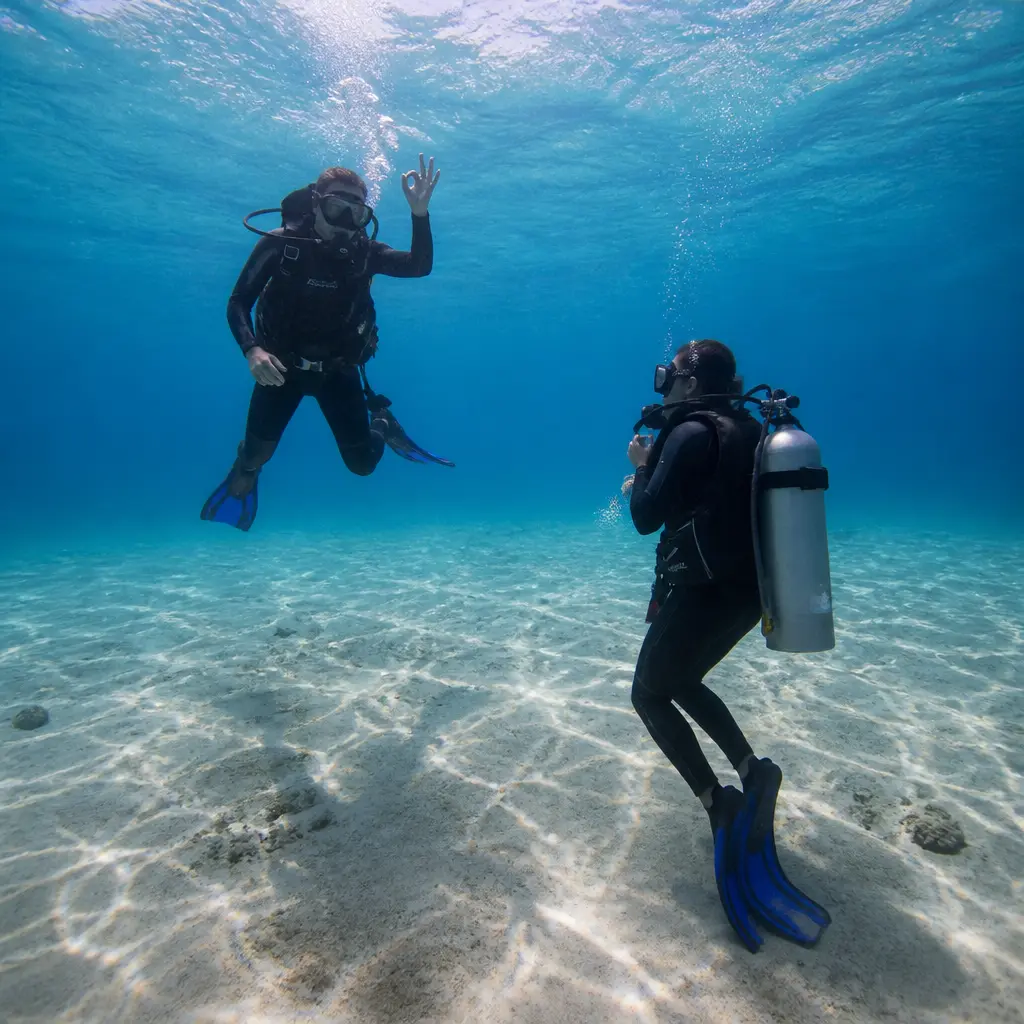
Emergency swimming ascent drills are structured procedures that teach a diver to reach the surface after a gas-supply failure while minimizing panic, breath-holding injury, uncontrolled ascent, and separation from a buddy. The most defensible approach is not a single dramatic maneuver: it is a controlled emergency swimming ascent (CESA) practiced only under qualified supervision, supported by buoyancy control, continuous exhalation, signaling, and conservative dive planning. The Centers for Disease Control and Prevention estimates that about 4,000 people die from unintentional drowning each year in the United States, while Divers Alert Network identifies inadequate gas management, rapid ascents, and poor emergency preparation as recurring contributors to diving incidents. Effective drills therefore combine prevention, decision-making, ascent mechanics, and post-surface survival.
Controlled Ascent Drills for Emergency Swimming Ascents
A controlled ascent drill is a supervised training exercise in which a diver simulates an out-of-air or unusable-air emergency and ascends while maintaining a safe body position, exhaling continuously, and controlling ascent speed. The Professional Association of Diving Instructors defines a CESA as an ascent made by swimming to the surface while continuously exhaling when no breathing gas is available and no alternate air source can be reached. It is an emergency skill, not a routine substitute for a buddy’s regulator, an independent redundant gas supply, or sound gas planning.
The central physiological principle is Boyle’s law: as surrounding pressure decreases during ascent, gas in the lungs expands. Holding the breath can trap expanding gas and cause pulmonary barotrauma, including arterial gas embolism. Continuous exhalation does not mean violently emptying the lungs; it means allowing a steady stream of bubbles or a controlled “ahh” sound while swimming upward. Divers Alert Network and recreational training agencies consistently emphasize this principle in discussions of emergency ascents.
CESA From a Shallow Training Depth
A shallow-water CESA is the basic hyponym of the controlled ascent drill. It normally begins at a depth selected by the instructor, often in confined water or a calm open-water site, with a fully equipped instructor positioned to intervene. The diver establishes neutral or slightly positive buoyancy, looks toward the surface without hyperextending the neck, begins a continuous exhalation, and swims upward at a controlled rate.
Training agencies commonly use a maximum ascent rate of about 9 metres per minute, or 30 feet per minute, for recreational diving, although the correct rate depends on the agency, equipment, dive profile, and circumstances. A CESA should never be practiced from depth merely to make the exercise more realistic. The purpose is to build an automatic response: stop, breathe if possible, signal or locate the buddy, secure alternate gas, and ascend under control only when those options fail.
Buoyant Emergency Ascent
A buoyant emergency ascent is an ascent in which the diver becomes positively buoyant and rises without swimming continuously. It is sometimes taught as a separate emergency skill, but it carries a significant risk of runaway ascent. Expanding air in the buoyancy compensator and exposure suit can increase positive buoyancy as depth decreases, making the diver accelerate precisely when gas expansion is greatest.
For that reason, buoyant emergency ascent training focuses on immediate control actions: maintain an airway, exhale continuously, release expanding gas from the buoyancy compensator, avoid entanglement, and abandon unnecessary equipment only when it can be done safely. The diver should not dump weights automatically at depth if doing so would create an uncontrollable ascent or leave the diver unable to stabilize at the surface. Instructors should select the response according to equipment configuration, environment, and certification level.
Buddy-Assisted and Alternate-Air-Source Ascent
A buddy-assisted ascent is usually safer than a solo swimming ascent because the donor supplies breathing gas while both divers ascend together. The out-of-air diver gives the established distress signal, takes the donor’s alternate second stage, confirms a secure grip or position, and follows the donor’s controlled ascent. The pair must monitor buoyancy, avoid entanglement, and maintain contact without interfering with either diver’s regulator.
This drill is closely related to gas-sharing, regulator recovery, and buddy separation procedures. It should be practiced without deliberately exhausting a cylinder or creating real gas deprivation. Instructors can simulate the emergency by having the diver close the cylinder valve only in a tightly controlled setting, or more safely by directing the diver to switch to the alternate air source while the instructor monitors the exercise. The National Association of Underwater Instructors and PADI both place strong emphasis on immediate access to a buddy’s alternate air source and on rehearsing the response before an actual emergency.
Emergency Ascent Decision-Making and Drill Design
The most useful ascent drill teaches a decision sequence rather than a reflexive race to the surface. A diver who cannot breathe should first identify whether the problem is a closed cylinder valve, regulator displacement, a tangled hose, or genuine gas exhaustion. If the regulator is reachable, the diver should recover it and attempt normal breathing. If the buddy is present, the diver should signal and obtain the alternate air source. Only when breathing gas cannot be restored and the surface is reachable should a CESA be considered.
The STOP–SIGNAL–BREATHE–ASCEND Sequence
A practical mental model is STOP–SIGNAL–BREATHE–ASCEND. It converts panic into a short sequence that can be rehearsed in confined water and adapted to different equipment systems.
- Stop unnecessary exertion and stabilize the body.
- Signal the buddy or team and look for the alternate air source.
- Breathe normally if gas is available; if not, begin continuous exhalation rather than holding the breath.
- Ascend under control, releasing expanding buoyancy-compensator gas and maintaining an open airway.
- At the surface, inflate the buoyancy aid, signal for help, remove the regulator only when breathing is secure, and stay with the group.
The sequence is intentionally simple because stress can reduce working memory and fine motor performance. The U.S. Navy Diving Manual and human-factors research in emergency response both support standardized procedures, repetition, and checklists as ways to improve performance under pressure. A drill should therefore include recognition of the problem, not just the ascent itself.
Ascent Rate, Exhalation, and Buoyancy Control
The diver should maintain a stable, streamlined posture, keep the airway open, and exhale continuously while monitoring the ascent. A dive computer or instructor can provide feedback, but the diver should not stare at the instrument or sacrifice awareness of the surface, buddy, overhead hazards, or boat traffic. In open water, the final metres can be especially hazardous because expanding buoyancy may accelerate the ascent.
The commonly cited recreational limit of 9 metres per minute is a planning benchmark, not permission to force a specific speed during a genuine emergency. A diver who is actively losing consciousness or cannot maintain an airway may need to prioritize survival over decompression optimization. Nevertheless, “faster is safer” is a dangerous assumption: rapid ascent increases the likelihood of barotrauma and decompression illness, while uncontrolled buoyancy can prevent the diver from stopping or communicating.
Surface Survival After the Ascent
Reaching the surface is only the midpoint of the emergency. The diver should establish positive buoyancy, keep the airway clear, signal loudly or visually, and avoid removing essential equipment until flotation and breathing are secure. If an ascent involved suspected decompression illness, loss of consciousness, chest pain, confusion, weakness, or breathing difficulty, the dive team should activate emergency medical services, provide oxygen if trained and equipped, and seek specialist medical advice.
The Red Cross and DAN recommend activating emergency assistance for serious diving symptoms rather than waiting to see whether they disappear. A surface drill can include deploying a surface marker buoy, using a whistle, orienting toward the boat or shore, and protecting an exhausted diver from waves and traffic. These actions address the common gap between “getting up” and actually surviving the incident.
Training Standards, Case Lessons, and Measurable Readiness
Why Gas Management Prevents More Emergencies Than Drills Alone
Emergency ascent skills are a last line of defense. The first line is adequate gas planning, including a reserve for a controlled ascent, safety stop when appropriate, navigation problems, delays, and assisting a buddy. Divers Alert Network accident analyses repeatedly identify low-gas situations and poor decisions under stress as preventable factors. A diver who begins the ascent with a reserve has more options than a diver who waits until the cylinder is empty.
A useful training metric is not simply whether the diver can complete a CESA. Instructors should assess whether the diver recognizes the emergency early, locates the buddy, uses the alternate air source correctly, controls buoyancy, exhales, maintains orientation, and communicates at the surface. Reassessment is appropriate after long breaks from diving, major equipment changes, illness, or a dive in a new environment.
Case-Based Practice Without Creating Real Danger
Scenario practice can represent common failures: a regulator knocked from the mouth, a closed cylinder valve, a separated buddy, a flooded mask, or a delayed boat pickup. The instructor should brief the exercise, establish a stop signal, maintain direct supervision, and prevent actual gas exhaustion. Students should never be pressured to perform a deep CESA, remove weights, or repeat a maneuver after distress appears.
A post-drill debrief should ask what the diver noticed first, which response was automatic, where buoyancy changed, whether the buddy was located, and what would have prevented the emergency. This approach turns an isolated skill into a broader safety system. Graphically, a training log could track recognition time, time to establish alternate gas, ascent-rate consistency, buoyancy corrections, and successful surface signaling across repeated sessions.
Conclusion: Emergency Swimming Ascent Drills That Actually Save Lives
Controlled ascent drills save lives when they build calm decision-making rather than encourage heroic swimming to the surface. The key entity-attribute pairing is the controlled emergency swimming ascent: a supervised, continuously exhaling ascent used only when breathing gas cannot be restored or shared. Its related forms—shallow-water CESA, buoyant emergency ascent, and buddy-assisted ascent—require different responses to buoyancy, equipment, and environmental risk.
The strongest program combines prevention through gas management, recognition through realistic but safe scenarios, execution through buoyancy and ascent-rate control, and survival through surface signaling and emergency care. Divers should practice only within their certification and instructor guidance, refresh skills regularly, and treat alternate-air-source use and buddy procedures as primary responses. Further reading should include current guidance from Divers Alert Network, the relevant training agency, the U.S. Navy Diving Manual, and local emergency medical authorities.
Sources: Centers for Disease Control and Prevention, Drowning Prevention and Facts, https://www.cdc.gov/drowning/data-research/facts/; Divers Alert Network, Annual Diving Report and Diving Safety Resources, https://dan.org/health-medicine/health-resources/diseases-conditions/; Professional Association of Diving Instructors, Emergency Swimming Ascents and Diver Training Standards, https://www.padi.com/; National Association of Underwater Instructors, Diver Training Standards, https://www.naui.org/; U.S. Navy, U.S. Navy Diving Manual, Revision 7, https://www.navsea.navy.mil/Home/SUPSALV/00C3-Diving/; American Red Cross, Scuba Diving and Aquatic Emergency Safety Guidance, https://www.redcross.org/


