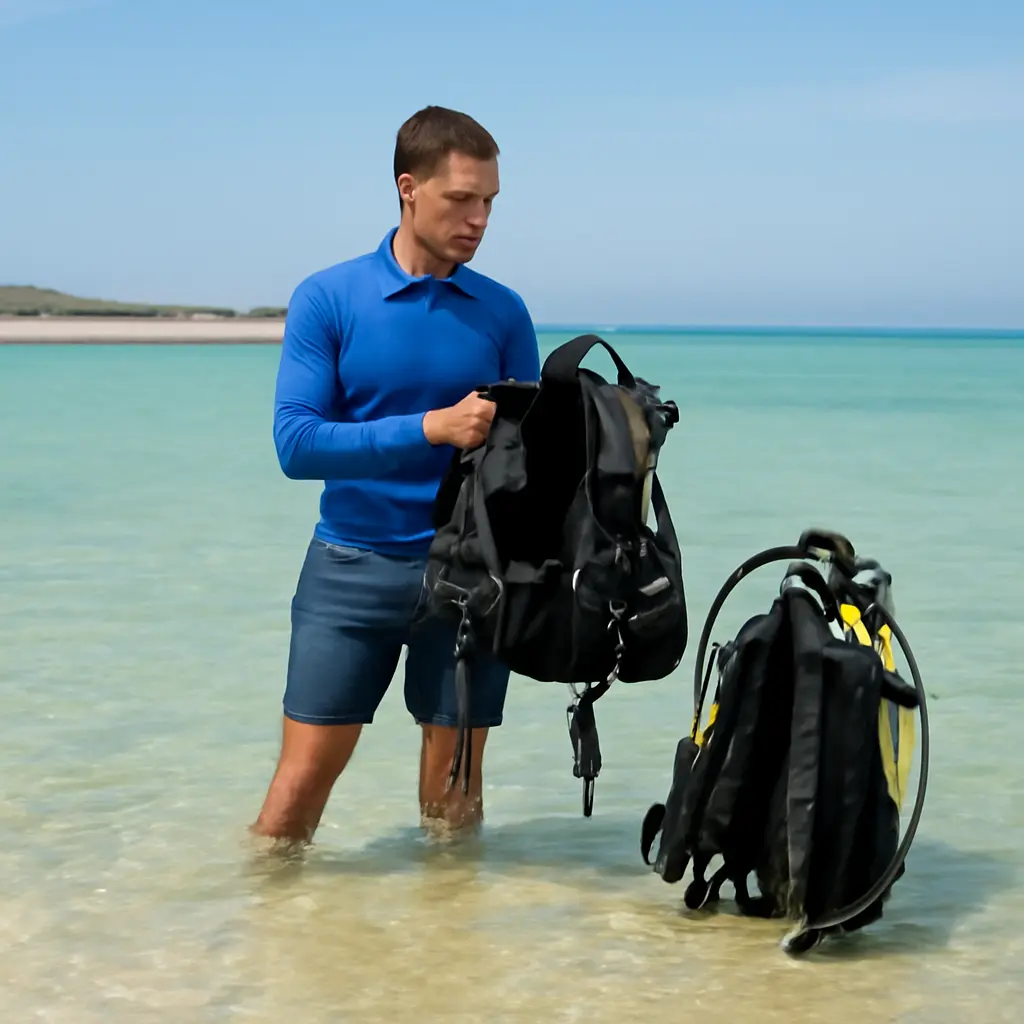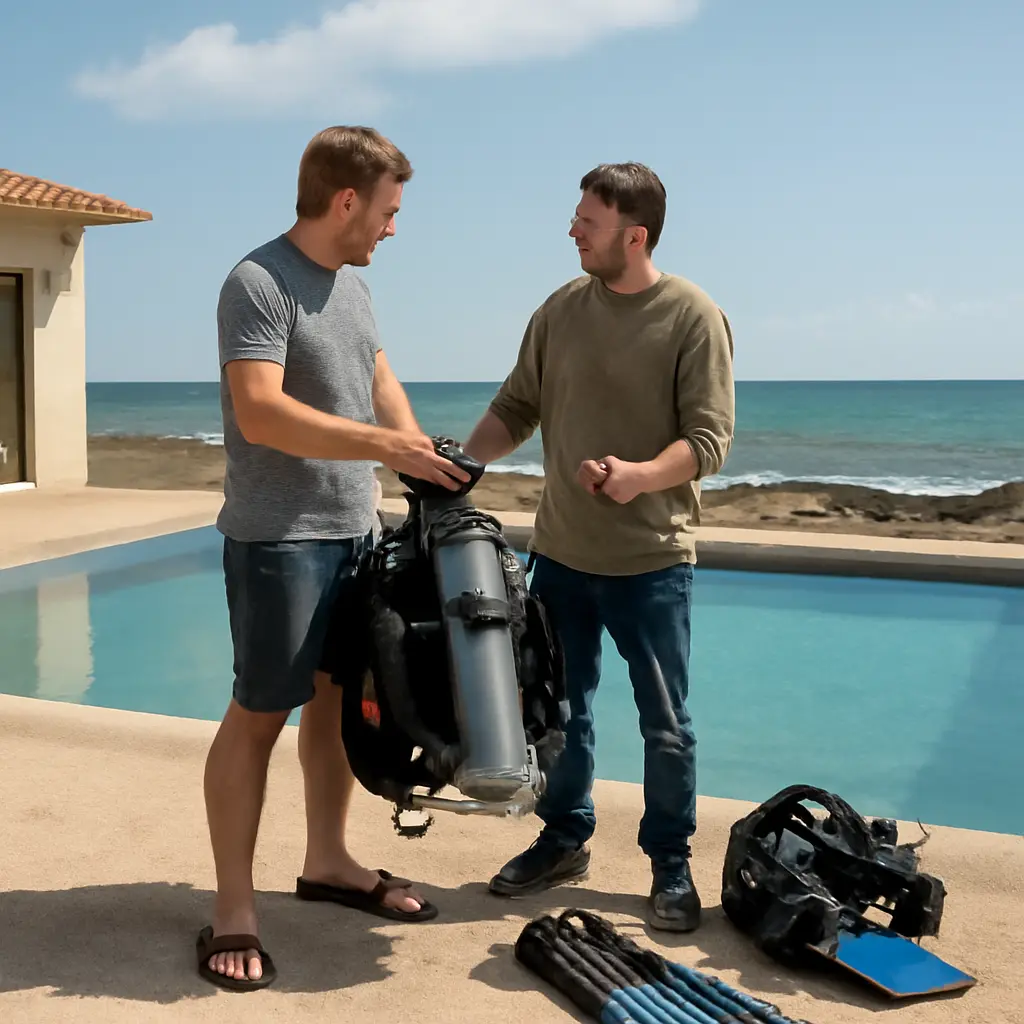
Becoming a certified recreational scuba diver typically takes two to four days of focused training, or several weeks when classes are spread across evenings and weekends. The exact timeline depends on the training agency, course format, local conditions, and how quickly a student demonstrates required skills. A common beginner certification, the PADI Open Water Diver course, combines knowledge development, confined-water practice, and four open-water dives. Those steps matter because certification is evidence that a diver has met defined training standards—not simply completed a set number of hours.
Scuba certification time depends on the course structure
A beginner scuba certification is a training credential that qualifies a person to dive within the limits of their training and certification, usually with a buddy and under conditions similar to those in which they trained. The Professional Association of Diving Instructors (PADI) describes its Open Water Diver course as having three main components: independent knowledge development, confined-water dives, and open-water dives. PADI says the course can be completed in as little as three or four days, while other schedules divide the same learning and practice over a longer period.
The most useful estimate is therefore not a single universal duration, but a range. A concentrated course may take a long weekend, while a local program may run over several weeks. Classroom or online study, travel to open-water sites, weather, and a student’s comfort in the water can all affect the calendar. Regardless of pace, students must complete the required learning and demonstrate the necessary skills.
Intensive resort or vacation courses
An intensive course schedules training on consecutive days, often at a destination with convenient access to suitable open water. PADI’s published guidance places its Open Water Diver course at about three to four days when completed in a concentrated format. The schedule generally includes knowledge review, confined-water sessions, and the required open-water training dives. A shorter timetable does not mean that required components are skipped; it means they are arranged closely together.
This format can suit travelers who have enough time and arrive prepared to study. It may take longer if conditions delay boat trips or shore dives, or if a student needs extra practice before demonstrating a skill. Before booking, ask the dive center how many training days are planned and whether the schedule includes contingency time.
Part-time and local dive-center courses
A part-time course spreads training across evenings or weekends. Students may complete theory at home or in a classroom, practice in a pool over several sessions, and finish open-water dives on a later weekend or trip. This commonly takes a few weeks, though the duration varies by provider and student availability.
Spreading sessions out can make the material easier to absorb and allow more time to become comfortable with equipment and underwater skills. The trade-off is that learners may need a refresher between sessions, and scheduling open-water dives can depend on site access and weather. Ask the training provider how long it allows students to complete the course before enrollment expires.
Referral and e-learning formats
A referral course separates the academic and pool portions from the open-water dives. A student may complete knowledge development and confined-water training with one instructor, then present training records to another participating dive center to finish the open-water portion. This is useful when someone learns at home but plans to complete the course while traveling.
Online learning can make the schedule more flexible, but it does not eliminate in-person practice or open-water evaluation. PADI and other training agencies offer digital course materials, while the practical requirements still need to be completed with a qualified instructor. Confirm in advance that the receiving center accepts the referral paperwork and has enough time to conduct the required training dives.
The beginner certification timeline has three core stages
The timeline is built around what a learner must know and demonstrate. PADI’s Open Water Diver course and comparable entry-level programs organize training into knowledge development, confined-water practice, and open-water dives. These are related but distinct stages: understanding dive principles supports safe decisions, pool or sheltered-water practice builds basic control, and open-water dives apply the skills in a natural environment.
Knowledge development and equipment basics
Knowledge development teaches foundational topics such as pressure, buoyancy, dive planning, communication, equipment use, and safety procedures. Depending on the agency and course format, this work may be completed through self-study, e-learning, classroom sessions, or a combination. Completing the study before practical training can help students use training time efficiently, but instructors still check understanding and readiness.
The time required varies with the learner and the format. Instead of treating a particular number of study hours as a guarantee, students should follow their agency’s course requirements and arrive prepared to explain key safety concepts. If a concept is unclear, taking extra time to review it is preferable to rushing ahead.
Confined-water training
Confined-water training takes place in a pool or another controlled environment suitable for practicing scuba skills. Students learn to assemble and use equipment, breathe through a regulator, clear a mask, manage buoyancy, and respond to basic problems. The controlled setting allows an instructor to observe performance and provide coaching before students move to open water.
The number and length of sessions depend on the course and the student’s progress. PADI’s Open Water Diver training includes confined-water dives, but students should not assume that passing a fixed number of sessions alone guarantees readiness. The instructor must be satisfied that required skills have been demonstrated to the applicable training standard.
Open-water training dives
Open-water dives are supervised training dives in a natural body of water, such as a sea, lake, or quarry. They let students apply skills in real dive conditions and demonstrate that they can manage equipment, buoyancy, communication, and basic procedures outside a pool. PADI’s Open Water Diver course requires four open-water training dives.
These dives are not simply sightseeing excursions. They are part of the assessment and may be delayed by visibility, currents, temperature, or other conditions that affect safety. If a student needs more practice, the instructor may require additional training before certification. That flexibility is a safety feature, not a sign that the student has failed.
Factors that can make certification faster or slower
Two students enrolled in the same course may finish on different schedules because training is performance-based and operating conditions differ. The Divers Alert Network (DAN) emphasizes the importance of appropriate training, conservative dive practices, and attention to individual health and circumstances. Planning for a realistic timeline helps prevent travel deadlines or cost pressures from encouraging a student to rush.
Water comfort and skill progression
Comfort in the water can influence how quickly a learner progresses, but prior swimming ability does not replace scuba training. New divers must become comfortable using equipment, controlling buoyancy, and completing skills while breathing underwater. Students who feel anxious or need extra practice should tell their instructor early so the training plan can be adjusted.
Certification agencies also set prerequisites. For example, PADI’s Open Water Diver course requires participants to meet minimum age requirements and demonstrate basic water skills. Check the current requirements for the specific agency and course, since prerequisites and procedures can vary.
Weather, water conditions, and logistics
Open-water training depends on conditions that a school cannot fully control. Wind, waves, currents, visibility, water temperature, and site access may affect whether a dive can proceed safely. Boat schedules, transportation, and the availability of an instructor can also add time, especially in remote or seasonal locations.
When comparing courses, ask whether the quoted duration is the planned schedule or a guaranteed completion date. A provider should be able to explain its weather policy, make-up options, and any additional costs if training must be extended.
Health screening and medical readiness
Medical readiness can affect when a student is able to begin or complete training. Recreational scuba involves breathing compressed gas underwater, so some health conditions or medications may require evaluation by a physician familiar with diving medicine. The Divers Alert Network recommends using appropriate medical guidance rather than assuming that a general fitness assessment is sufficient.
Complete the training agency’s medical questionnaire honestly and well before the course. If the form indicates that medical clearance is needed, arrange it in advance; waiting until the first day can delay participation. This is particularly important when a course is scheduled around flights or a short vacation.
What certification allows—and what it does not
An entry-level certification records that a diver has completed a recognized course and demonstrated specified competencies. It is not a guarantee of expertise, a substitute for experience, or permission to dive in every environment. The certification level, local rules, conditions, and the diver’s recent experience all matter when deciding whether a particular dive is appropriate.
Certification is not the same as advanced training
Open Water Diver is an entry-level recreational certification. Additional courses, such as advanced training or specialty courses, build skills for particular activities and environments, but they do not remove the need for gradual experience and sound judgment. Divers should follow the limits stated by their training agency and avoid treating a new card as evidence that they are ready for deep, overhead, or otherwise demanding dives.
The practical next step after certification is to make conservative dives with a qualified buddy, continue practicing core skills, and seek further instruction when a planned dive exceeds current training or comfort. A dive operator may also assess a diver’s experience or request a check dive, especially after a long period out of the water.
Certification does not expire, but skills can fade
Most recreational certification cards do not have a routine expiration date, but inactivity can reduce confidence and skill. PADI recommends a refresher for divers who have not dived for an extended period, and many dive centers offer review sessions before a diver returns to open water. The appropriate preparation depends on how long the diver has been inactive and what conditions are planned.
A useful rule is to be candid with the operator about recent dive history and ask whether a refresher or check dive is advisable. Certification is a starting point for continuing practice, not a one-time guarantee of readiness.
How to plan a realistic certification schedule
A practical plan leaves room for learning, rest, and weather delays. Before enrolling, compare the course structure, instructor support, group size, included equipment, and the number of days reserved for open-water training. The cheapest or shortest advertised option is not necessarily the best fit if it leaves no time to address questions or repeat a skill.
- Choose a recognized training agency and a dive center with qualified instructors.
- Ask which portions are completed online, in confined water, and in open water, and how many training dives are required.
- Complete the medical questionnaire and arrange any required physician evaluation before the course.
- Finish assigned study early and bring questions to the instructor.
- Reserve extra time for weather, additional practice, or scheduling changes, especially when traveling.
- After certification, continue diving conservatively and seek a refresher if you have been inactive.
A simple timeline graphic could compare a three-to-four-day intensive course with a multiweek part-time course, showing the same three milestones—knowledge development, confined-water training, and open-water dives—on different calendars. The key distinction is schedule, not the basic training components.
Conclusion: Most beginners can certify in days, but readiness sets the pace
Becoming a certified recreational scuba diver often takes three to four days in an intensive program or several weeks in a part-time schedule. The process typically includes knowledge development, confined-water skill practice, and supervised open-water dives; PADI’s Open Water Diver course, for example, requires four open-water training dives. Water comfort, health clearance, weather, logistics, and the need for additional practice can change the timeline.
Choose a course based on instructor quality and a schedule that allows you to learn safely, rather than on speed alone. Review the requirements of the training agency, ask the dive center how it handles delays, and be prepared to take extra time if needed. For further guidance, consult the agency’s current course materials and the Divers Alert Network’s recreational diving health and safety resources.
Sources: PADI, Open Water Diver Course, https://www.padi.com/courses/open-water-diver; PADI, Frequently Asked Questions About Scuba Diving, https://www.padi.com/faq; Divers Alert Network, Medical Guidance for Recreational Scuba Divers, https://dan.org/health-medicine/health-resources/; Divers Alert Network, Returning to Diving After a Break, https://dan.org/health-medicine/health-resources/diseases-conditions/