
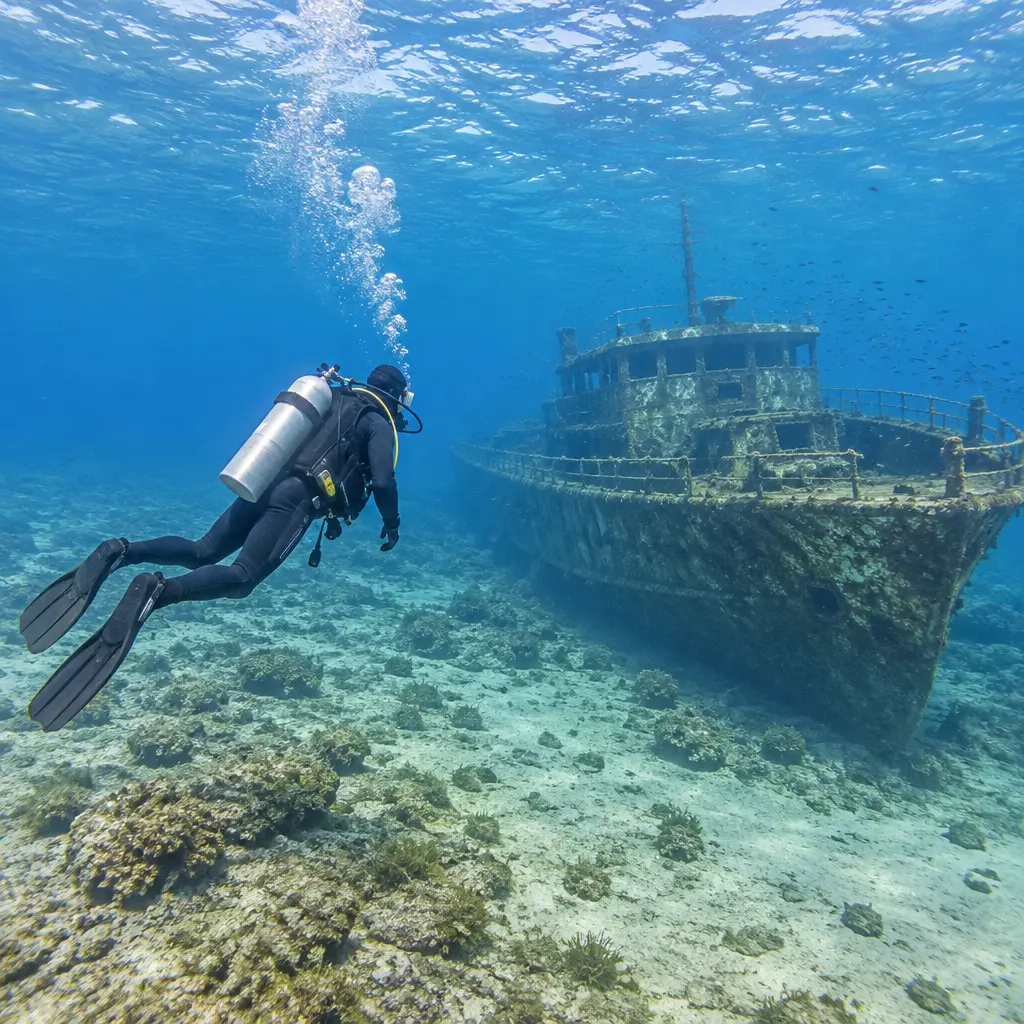
A wreck is both a dive site and, in many cases, a historical place containing fragile evidence of past lives and events. Ethical wreck diving means observing the site without removing, damaging, or needlessly disturbing it—and avoiding penetration into enclosed spaces where entanglement, disorientation, silt-out, and collapse can turn a visit into a fatal emergency. The National Oceanic and Atmospheric Administration (NOAA) describes shipwrecks as archaeological resources that can preserve information about maritime history, while diving-safety organizations warn that overhead environments require specialized training and equipment. These principles matter at scale: the National Park Service notes that thousands of shipwrecks lie within U.S. national parks and preserves, and UNESCO estimates that there are at least three million shipwrecks worldwide. This article explains wreck-site stewardship, the hazards of structural entry, practical no-entry and limited-entry ethics, and examples of how conservation rules protect both divers and history.
Wreck diving ethics and historical-site preservation
Wreck diving ethics are the principles and practices that protect people, artifacts, and the physical and archaeological context of a submerged wreck. In its guidance on underwater cultural heritage, UNESCO frames preservation in place as the preferred option when feasible, because a site’s value is not limited to individual objects: location, arrangement, construction details, and traces of use can all carry evidence. NOAA similarly treats wrecks as cultural resources rather than underwater salvage opportunities. Ethical diving therefore prioritizes non-disturbance, compliance with local law, and conservative limits on access.
The main categories include non-contact observation, responsible photography, reporting damage or newly discovered sites, and—only where permitted and properly qualified—planned penetration. These categories are related but not interchangeable: a diver can harm a site without entering it by touching corroded fittings, lifting objects, or stirring sediment. Conversely, an entry that is technically possible may still be inappropriate if it risks damaging the wreck or disturbs human remains.
Preserving context, not just artifacts
Archaeological context is the relationship between an object and its position, surrounding materials, and site history. Removing a plate, tool, or personal item can erase information about where it was found and how it relates to other evidence. The Society for Historical Archaeology’s ethics guidance emphasizes responsible stewardship and discourages unauthorized collecting. Even apparently loose objects should be left in place: currents, biological growth, and sediment may make an item look detached when it remains part of a meaningful deposit.
Non-disturbance and low-impact observation
Non-disturbance means keeping fins, hands, gauges, reels, and equipment clear of the wreck and its surroundings. Good buoyancy control reduces accidental contact and sediment clouds; a silt-out can obscure exits and also make a site harder to study. Divers should avoid tying lines to fragile structures, moving objects for photographs, or entering openings merely to improve a viewing angle. A useful rule is to leave the site as found and to treat every unknown feature as potentially significant.
Legal and cultural responsibilities
Wreck protection laws differ by country, location, ownership, and the circumstances of a vessel’s loss. In the United States, the Abandoned Shipwreck Act of 1987 addresses certain abandoned shipwrecks embedded in submerged lands and transfers title to states in specified circumstances; other protections can apply to federal, tribal, military, or protected-area sites. NOAA’s Office of National Marine Sanctuaries also manages sites under regulations that may restrict activities such as removing, damaging, or disturbing resources. Before diving, check the relevant authority’s current rules, permits, and site notices rather than assuming that a wreck is abandoned or open to entry.
Structural entry hazards and wreck-diving risk
Structural entry, often called wreck penetration, is diving beyond a direct, unobstructed route to the surface into an overhead environment. The National Association of Underwater Instructors (NAUI) and other training agencies distinguish this from swimming around the exterior: inside, a diver may not be able to ascend directly because decks, bulkheads, or collapsed sections block the way. The hazards include entanglement, unstable structure, sharp metal, restricted visibility, silting, confusing passages, and limited gas reserves. A wreck can deteriorate over time, so a route that appeared open on a previous dive may change.
The National Institute for Occupational Safety and Health (NIOSH) has documented the severe consequences of occupational diving incidents, while recreational training agencies emphasize that overhead diving requires specific preparation beyond ordinary open-water certification. There is no single global statistic that captures the risk of recreational wreck penetration; incident reporting varies by country and activity. The absence of a universal rate is not evidence of safety. The practical distinction is clear: an exterior swim-around generally preserves a direct ascent, while penetration adds overhead, navigation, and exit-management demands.
Entanglement, silt-out, and disorientation
Entanglement occurs when a diver or equipment becomes caught in fishing line, netting, cables, or loose material. Silt-out occurs when fin kicks or contact suspend fine sediment, reducing visibility—sometimes to near zero. In a confined space, losing sight of the exit or guideline can rapidly increase stress and gas consumption. Divers should never pull on unknown cables or nets, and should not enter a wreck to free another diver unless trained and equipped for that specific rescue; an improvised rescue can create additional victims.
Collapse, sharp edges, and changing structures
Corrosion, biological activity, storms, and seabed movement can weaken a wreck’s structure. Rusted plating and broken fittings may have sharp edges, while a seemingly solid deck or passage may be unsupported. A diver cannot reliably assess the load-bearing strength of a submerged structure by sight. Avoid climbing, pulling, bracing against, or passing beneath unstable features. If an area is newly collapsed, snagged with debris, or visibly shifting, stay out and report the condition to the site manager or local maritime authority.
Gas planning and the no-direct-ascent problem
An overhead environment changes emergency options: a diver may need to follow a route back to open water rather than ascend vertically. Penetration planning therefore requires appropriate training, redundant equipment, a continuous guideline, team procedures, and gas reserves calculated for a return and possible emergency—not simply enough gas for the inward swim. Divers without recognized overhead-environment training should remain outside. Even trained divers should decline entry when conditions, visibility, team readiness, or the wreck’s state do not support a conservative plan.
No-entry ethics and responsible wreck-diving practice
A no-entry policy is the decision to observe a wreck from outside rather than cross into its enclosed spaces. It is the safest and often the most conservation-minded choice for recreational divers, especially on unidentified, protected, unstable, or poorly documented wrecks. No-entry does not mean the dive has little value: exterior observation can reveal hull form, machinery, construction methods, marine life, and the site’s changing condition without exposing divers to overhead hazards or disturbing interior deposits.
Pre-dive research and site selection
Before a dive, confirm the wreck’s identity if known, depth, access rules, hazards, and any restrictions on photography, anchoring, or penetration. Consult a reputable local operator, marine park authority, maritime museum, or heritage agency. NOAA’s maritime heritage resources and state historic-preservation offices can help identify protected sites and reporting channels. A site briefing should cover currents, descent and ascent plans, team limits, emergency procedures, and a clear turn-around or no-entry decision point.
Low-impact techniques underwater
Divers can reduce impact by maintaining trim and buoyancy, keeping a safe distance from surfaces, securing dangling equipment, and avoiding contact with the bottom. Use lights and cameras without wedging them into openings or moving objects. Do not collect souvenirs, remove marine growth, or place permanent markers. If a line is needed for a permitted technical penetration, it should be managed by trained divers according to established procedures and removed or handled as site rules require.
Photography, documentation, and reporting
Responsible documentation records a site without altering it. Photographs can help researchers track deterioration, but images should not disclose sensitive locations when that could encourage looting or uncontrolled visitation. Report newly observed damage, exposed artifacts, entangling debris, or suspected human remains to the appropriate authority or site manager; do not handle or relocate the material. UNESCO’s Convention on the Protection of the Underwater Cultural Heritage encourages cooperation and responsible reporting as part of safeguarding submerged heritage.
Case studies in wreck protection and responsible access
Protected wrecks show why access decisions must account for history, law, and diver safety together. Rules vary by site: some permit exterior recreational diving under conditions, while others restrict all access because of human remains, unexploded ordnance, fragile structure, or ongoing research. The examples below illustrate that a wreck’s appeal does not create a right to enter or remove material.
USS Arizona, Pearl Harbor
The USS Arizona Memorial honors those killed during the 1941 attack on Pearl Harbor, and the wreck remains a war grave. The National Park Service manages the memorial and its associated resources; access to the submerged wreck is not ordinary recreational diving. The site demonstrates that memorial significance and human remains can make non-entry an ethical obligation, not merely a personal risk choice.
Thunder Bay National Marine Sanctuary
NOAA’s Thunder Bay National Marine Sanctuary in Lake Huron protects a collection of shipwrecks within a designated marine sanctuary. The sanctuary provides public information and site-management guidance, while applicable regulations prohibit damaging or disturbing sanctuary resources. Its approach illustrates how interpretation and managed visitation can make wrecks accessible without treating them as sources of souvenirs.
UNESCO and preservation in place
The UNESCO 2001 Convention on the Protection of the Underwater Cultural Heritage establishes principles for protecting underwater heritage, including preservation in place as the preferred option and opposition to commercial exploitation. UNESCO estimates that at least three million shipwrecks are spread across the world’s oceans. That estimate underscores the scale of the resource, but the sites are not all equally documented or protected; careful recording, legal oversight, and non-disturbance are therefore central to responsible diving.
Conclusion: protect the wreck and the diver
Wreck-diving ethics begin with a simple principle: observe without taking or damaging. Historical preservation depends on leaving artifacts and their context in place, following site-specific laws, and reporting concerns to responsible authorities. Structural entry adds overhead hazards—especially entanglement, silt-out, disorientation, collapse, and constrained gas planning—that call for specialized training and conservative judgment. For most recreational divers, an exterior-only dive is the best balance of access, safety, and stewardship.
Before your next wreck dive, review the site’s legal status and hazards, choose a qualified operator, and decide in advance that you will turn back rather than enter an unknown or unstable space. For further learning, consult NOAA maritime heritage resources, UNESCO’s underwater cultural heritage guidance, local heritage agencies, and a recognized overhead-environment training organization. Responsible choices help ensure that wrecks remain places of learning and remembrance—not damaged sites or preventable emergencies.
Sources: UNESCO, Convention on the Protection of the Underwater Cultural Heritage, https://www.unesco.org/en/legal-affairs/convention-protection-underwater-cultural-heritage; UNESCO, Underwater Cultural Heritage, https://www.unesco.org/en/underwater-heritage; NOAA Ocean Exploration, Maritime Heritage, https://oceanexplorer.noaa.gov/; NOAA Office of National Marine Sanctuaries, Maritime Heritage Program, https://sanctuaries.noaa.gov/maritime/; National Park Service, Shipwrecks, https://www.nps.gov/subjects/shipwrecks/index.htm; National Park Service, USS Arizona Memorial, https://www.nps.gov/perl/; U.S. Congress, Abandoned Shipwreck Act of 1987, https://www.govinfo.gov/content/pkg/STATUTE-101/pdf/STATUTE-101-Pg125.pdf; Society for Historical Archaeology, Ethics in Historical Archaeology, https://sha.org/about-us/ethics-statement/; National Institute for Occupational Safety and Health, Commercial Diving, https://www.cdc.gov/niosh/diving/; NOAA, Thunder Bay National Marine Sanctuary, https://thunderbay.noaa.gov/


