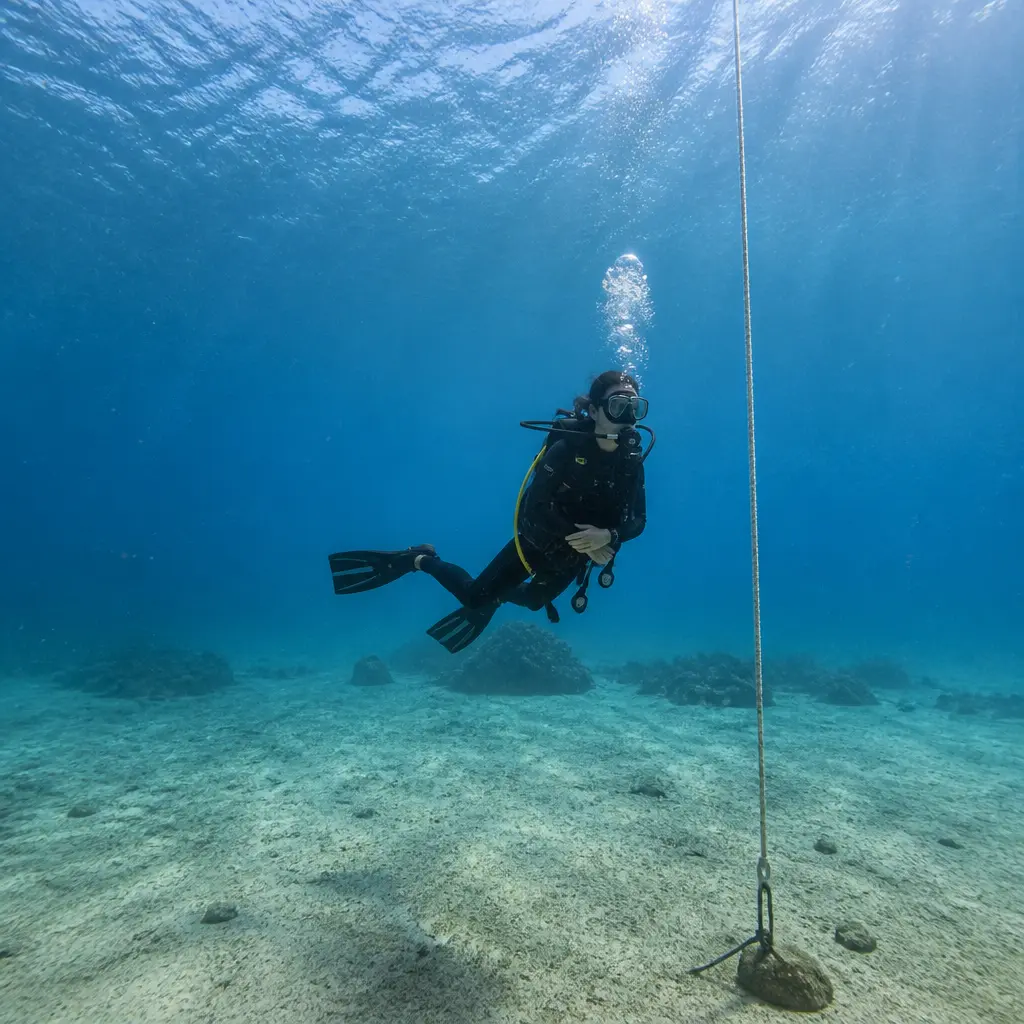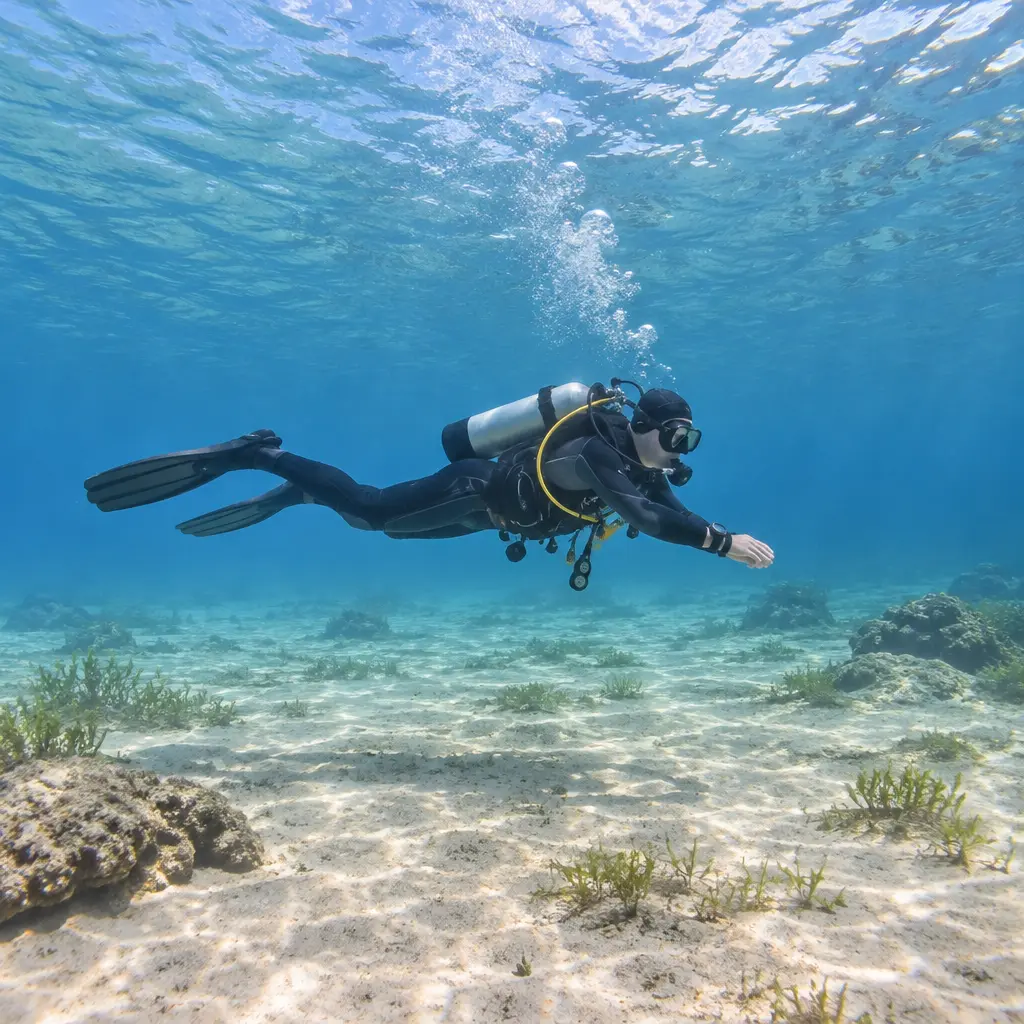
Buoyancy control is a diver’s ability to regulate movement up, down, or at a steady depth by balancing buoyancy, breathing, and equipment. Precise weight distribution supports that control: divers who carry only the ballast they need and position it to maintain a stable, streamlined trim can often avoid unnecessary finning and repeated buoyancy corrections—efforts that may reduce air use, although no single weight setup guarantees a particular savings. This guide explains how weighting and trim work, how to assess ballast and distribute it safely, and how to practice and measure improvements without sacrificing emergency access or safety.
How Buoyancy Control Depends on Precise Weight Distribution
Buoyancy is the net upward or downward force on a diver, resulting from the weight of the diver and equipment compared with the weight of the water displaced. Archimedes’ principle describes this relationship: an immersed object experiences an upward force equal to the weight of the fluid it displaces. A diver adjusts the system mainly by changing the volume of gas in the buoyancy compensator (BC) and lungs, while ballast and equipment placement affect how the body balances and moves.
The Professional Association of Diving Instructors (PADI) teaches buoyancy as a core skill involving proper weighting, controlled breathing, and BC use. Weight distribution adds a separate but related factor: ballast can be carried at the waist, integrated into a BC, or positioned in trim pockets, while cylinders and other equipment also influence a diver’s balance. A correctly weighted diver may still have poor trim if the weight sits in the wrong place; conversely, a streamlined posture cannot compensate for excessive ballast.
The connection to air consumption is practical rather than automatic. A diver who is overweighted may need to inflate the BC more to remain at a given depth; the larger gas volume increases drag, and poor posture can add further resistance. More finning and frequent depth corrections can raise exertion and breathing demand. DAN, the Divers Alert Network, identifies exertion, equipment, environment, and diver behavior among the factors affecting gas use. There is no universal percentage by which better trim reduces consumption, so divers should compare their own gas use under similar conditions.
How Weighting and Trim Shape Diver Performance
Weighting is the amount of nonbuoyant ballast needed to control buoyancy, including the effects of exposure protection, cylinder buoyancy, and the gas that will be consumed during the dive. Trim is the diver’s orientation in the water—commonly described as horizontal, feet-down, or head-down—and how steadily that position can be maintained. Together, they influence stability, drag, finning effort, and the diver’s ability to hold depth.
These concepts have several practical forms: a buoyancy check establishes an appropriate ballast starting point; weight placement adjusts rotational balance; and trim practice tests whether the diver can maintain a stable posture without sculling or continual fin movement. Equipment configuration matters too. A wetsuit becomes less buoyant as it compresses at depth, while cylinder buoyancy can change as breathing reduces the amount of gas inside it. The required setup therefore depends on the full system, not on a fixed number of pounds or kilograms.
Minimum Appropriate Ballast
Minimum appropriate ballast is the amount that allows a diver to control a planned dive safely, including the end-of-dive condition when the cylinder contains less gas. It does not mean carrying the least weight possible regardless of circumstances. A diver must retain enough ballast to make a controlled descent and remain capable of holding a safety stop with the BC appropriately managed.
A common starting check is performed in shallow water with the exposure suit and equipment used for the dive. With the BC nearly empty and normal breathing, the diver should be able to descend in a controlled way; at the end of the dive, the diver should be able to maintain the required stop without relying on a fully inflated BC. PADI and other training agencies emphasize checking weighting in the actual configuration because suit thickness, cylinder type, salt versus fresh water, and accessory changes affect buoyancy. Follow the diver’s training, local procedures, and instructor guidance rather than treating any single test as universal.
Weight Placement and Rotational Balance
Weight placement determines how ballast affects the diver’s rotation around the body. Moving weight higher or lower, or closer to the torso, can help address a tendency to roll or pitch, but the result depends on the diver’s body shape, cylinder position, BC design, and equipment. Integrated pockets, a weight belt, and trim pockets are different ways to carry ballast; none is inherently correct for every diver.
Make small, reversible adjustments in a controlled setting and change one variable at a time. Keep any releasable ballast accessible, and ensure that the diver and buddy understand how the system is released. DAN’s diving-safety guidance stresses equipment familiarity and appropriate configuration; a trim improvement is not worthwhile if it makes emergency weight release difficult or creates an entanglement hazard.
Horizontal Trim and Streamlining
Horizontal trim is a near-level body position that helps a diver move through the water with less frontal area than an upright posture. A diver who is feet-down or head-down may push more water while swimming, increasing resistance and potentially requiring more effort. Properly positioned ballast can contribute to horizontal balance, but fin technique, cylinder placement, BC fit, and breathing control also matter.
The relationship between streamlining and gas consumption is supported by basic fluid mechanics: drag rises with speed and depends on the body’s shape and exposed area. However, there is no reliable universal air-saving figure for a particular trim correction. A useful field comparison records starting and ending pressure, dive duration, depth profile, water conditions, cylinder size, and exertion, then compares similar dives rather than attributing every difference to weight placement.
How to Assess and Refine Weight Distribution
A repeatable assessment separates total ballast from its placement. First establish a safe weighting baseline; then evaluate body position and movement. Make adjustments only within the limits of training and with a qualified instructor or experienced buddy when needed. This process is especially important after changing exposure protection, cylinder, BC, or accessories.
Conduct a Controlled Buoyancy Check
Use a calm, shallow area and the complete equipment configuration planned for the dive. With the BC vented as appropriate and breathing normally, check whether descent and neutral buoyancy can be controlled without kicking down. Reassess near the end of a dive or in a supervised simulation that accounts for cylinder gas consumption. Avoid making a large ballast change based on a single breath, unusual wave action, or a test performed with different equipment.
Salt water is denser than fresh water, and exposure suits provide buoyancy that varies with material, thickness, and depth. These variables mean a weighting setup that works in one site may not work in another. Record the configuration and conditions so future adjustments are based on evidence rather than memory.
Evaluate Trim Without Uncontrolled Movement
In a safe, controlled environment, have a buddy or instructor observe whether the diver can hold a stable position without sculling, bicycle-kicking, or repeatedly inflating and venting the BC. Check that the cylinder and equipment do not shift, hoses are secured, and the diver can reach controls. Adjust weight placement in small increments, then retest at the same depth and with the same posture.
A video or simple observation chart can help identify whether the diver is consistently feet-down, head-down, or rolling. Change one factor at a time—such as a trim-pocket position or cylinder height—so the effect is clear. Do not remove or relocate releasable ballast in a way that compromises the ability to ditch weight or maintain a safe ascent.
Track Gas Use Fairly
To see whether a change helps air consumption, compare dives with similar depth, duration, water conditions, current, task loading, cylinder type, and breathing equipment. Record starting and ending cylinder pressure and dive time; where appropriate, calculate surface air consumption (SAC) or respiratory minute volume (RMV) using a consistent method. These metrics are estimates and are only comparable when units, cylinder capacity, and depth data are handled consistently.
A simple chart can show “gas used per minute” across comparable dives before and after a trim adjustment. If gas use changes, consider other explanations—temperature, stress, current, workload, and familiarity—before concluding that weight placement caused the difference. Never extend a dive or reduce reserve gas because an apparent efficiency gain has been observed.
How Diving Conditions and Equipment Change the Setup
Weight distribution is not a one-time calculation. Water density, suit compression, cylinder characteristics, and equipment additions can alter buoyancy and balance. A setup should be checked whenever a meaningful configuration or environmental change occurs, especially before a dive in unfamiliar conditions.
Exposure Protection and Water Type
Wetsuits trap gas in foam, providing buoyancy at the surface; as depth increases, pressure compresses the material and reduces its volume. Thicker suits generally require more ballast at the surface, but the exact amount varies by suit and diver. Dry suits introduce another buoyancy-control system and require specific training and practice. Divers should not transfer a weighting setup between wetsuit and dry-suit diving without reassessment.
Fresh water is less dense than seawater, so a diver and equipment displace less buoyant force in fresh water at the same volume. The practical ballast difference depends on the diver’s body, suit, and gear; use a buoyancy check rather than relying on a generic conversion.
Cylinder Gas and Equipment Configuration
A cylinder becomes more buoyant as breathing removes gas, and cylinders differ in material, size, and buoyancy characteristics. This means the diver must consider both the beginning and end of the dive. BC type, backplate, lights, cameras, reels, and other accessories can also change the system’s balance or drag.
For example, a diver who adds a camera may notice a persistent roll or a tendency to pitch forward. Adding ballast automatically may mask the cause and increase total weight. First check how the accessory is mounted, whether it can be repositioned, and whether hoses or straps are pulling the diver out of balance. Consult an instructor or equipment technician for changes that affect release systems or configuration.
Safety Practices and Common Weighting Errors
Efficient buoyancy is valuable, but safety takes precedence over reducing gas use. Divers should use equipment they understand, maintain a planned gas reserve, follow their certification limits, and avoid making experimental changes during a demanding dive. Buoyancy problems can contribute to uncontrolled ascents or descents, so adjustments belong in a controlled environment.
Avoid Overweighting and Underweighting
Overweighting can require greater BC inflation, increase drag, and make stable trim more difficult. Underweighting can make descent or a controlled stop difficult, particularly as cylinder gas is consumed. Neither condition should be corrected by forceful finning or by holding breath; divers should return to a safe assessment, review the configuration, and seek qualified instruction if uncertain.
Protect Release Access and Buddy Awareness
Ballast systems must be secure during the dive yet releasable as designed. Keep handles and releases unobstructed, avoid placing non-releasable trim weight where it interferes with emergency procedures, and brief the buddy on the system. The correct arrangement is the one that balances control, streamlining, and emergency accessibility—not simply the one that produces the flattest posture.
Conclusion: Better Buoyancy Through Measured Adjustments
Precise weight distribution supports buoyancy control by helping a diver maintain stable trim and avoid unnecessary movement. Appropriate ballast, thoughtful placement, streamlined equipment, and controlled breathing work together; none alone guarantees lower air consumption. Because conditions and equipment change, divers should verify weighting, make small adjustments under supervision when needed, and compare gas use only across genuinely similar dives.
For a practical next step, record your equipment, water type, exposure protection, cylinder, and gas use on several comparable dives, then ask a qualified instructor to review your weighting and trim. Continue to prioritize safe stops, gas reserves, buddy communication, and emergency access. The broader benefit is not merely efficiency: confident buoyancy helps divers move with greater control and reduce avoidable disturbance to the underwater environment.
Sources: Professional Association of Diving Instructors (PADI), Peak Performance Buoyancy course information, https://www.padi.com/courses/peak-performance-buoyancy; Divers Alert Network (DAN), Buoyancy and diving safety resources, https://dan.org/health-medicine/health-resources/; NOAA Ocean Exploration, Archimedes’ Principle and buoyancy educational resources, https://oceanexplorer.noaa.gov/; U.S. Navy, U.S. Navy Diving Manual, Revision 7, https://www.navsea.navy.mil/Home/SUPSALV/00C3-Diving/