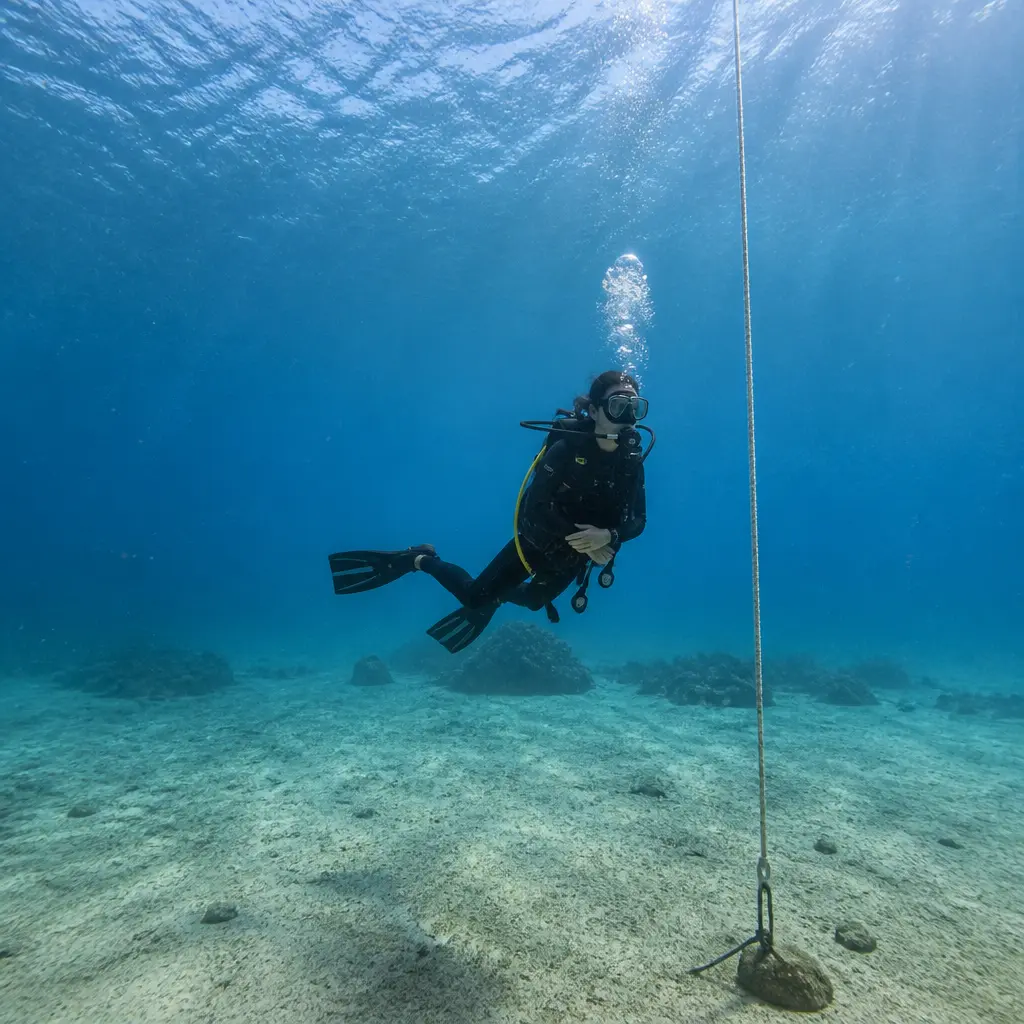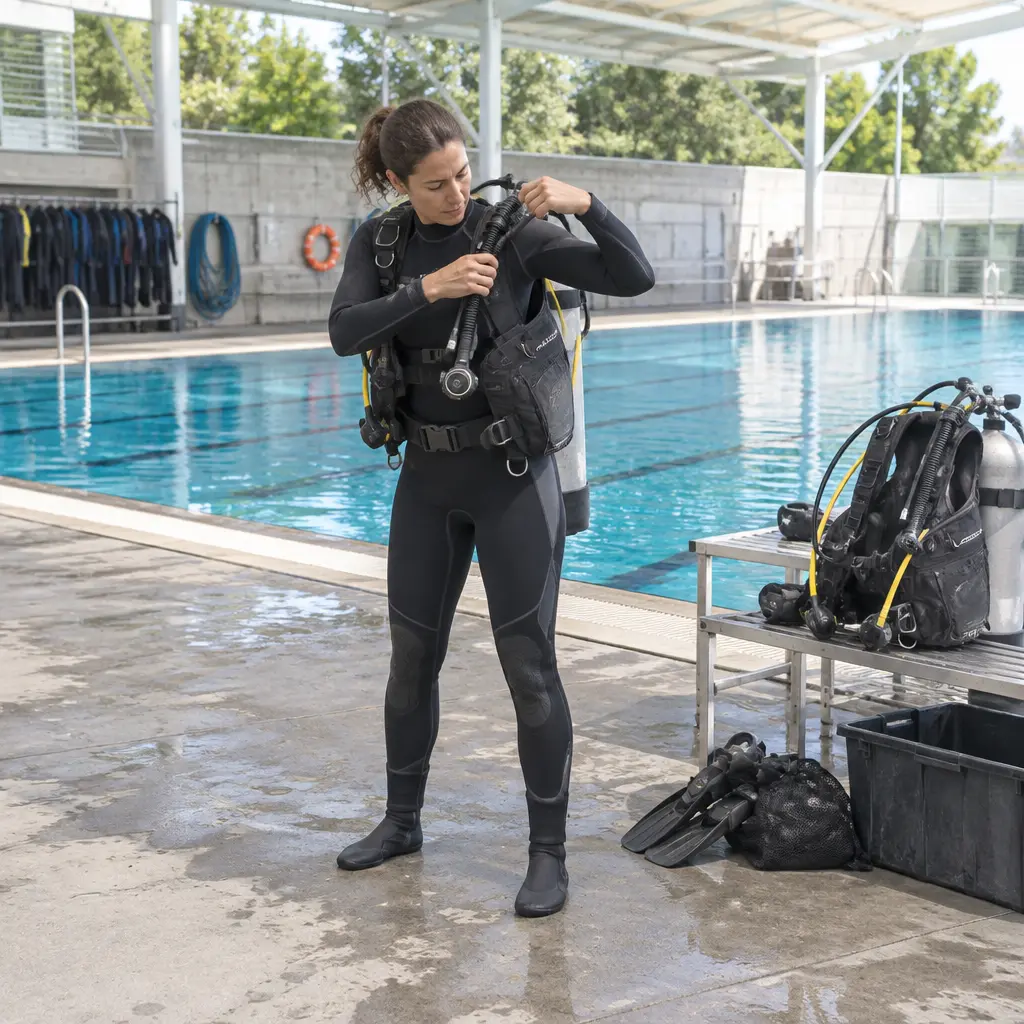
A buoyancy control device (BCD) and regulator setup is the arrangement of a diver’s buoyancy, breathing, and hose components to suit their body, exposure protection, environment, and diving tasks. Personalizing that setup can improve comfort and access to controls, but it should never override manufacturer instructions, training, or a pre-dive safety check. The Divers Alert Network (DAN) emphasizes that proper weighting and buoyancy control are central to safe diving; there is no single BCD style or regulator configuration that fits every diver. This guide explains how to choose and adjust BCD fit, ballast, regulator hoses, and accessories, then verify the result in the water.
BCD and regulator configuration: the principles of personal fit
A BCD, also called a buoyancy compensator, is a diver-worn device that adds or releases gas to help manage buoyancy. A regulator reduces cylinder pressure to provide breathable gas at ambient pressure. Together, they affect trim, workload, equipment access, and comfort. The Professional Association of Diving Instructors (PADI) describes buoyancy control as a core diving skill, while DAN’s safety guidance stresses that correct weighting and equipment familiarity support controlled ascents and descents.
The relevant configurations include jacket-style, back-inflate, and backplate-and-wing BCDs; integrated-weight and separate-weight arrangements; and standard or customized regulator hose routing. The best choice depends on body shape, exposure suit, cylinder, water type, and the task—not on a claim that one configuration is universally safer. A useful measure of success is whether the diver can breathe comfortably, reach critical controls, maintain stable trim, and release or operate equipment without snagging.
BCD types and body fit
A jacket BCD wraps around the torso and commonly includes side or rear buoyancy cells. A back-inflate BCD places most lift behind the diver, while a backplate-and-wing system pairs a rigid or semi-rigid plate with an inflatable wing and adjustable harness. These designs can feel different at the surface and underwater, so fit should be assessed with the exposure suit and cylinder the diver will actually use.
Fit checks should include secure shoulder and waist adjustment, a stable cylinder, unobstructed access to the inflator and dump valves, and no uncomfortable pressure when the BCD is inflated. Try the system while standing and, when possible, in shallow water under instructor supervision. A BCD that shifts, restricts breathing, or pushes the diver into an unwanted position needs adjustment or a different size or design.
Lift capacity and ballast
Lift capacity is the amount of buoyant force a BCD can provide. It must be appropriate for the diver’s equipment and conditions; an unnecessarily large device may add bulk, while insufficient lift may not support the diver and equipment at the surface. Follow the manufacturer’s specifications and ask a qualified instructor or dive professional to assess the complete system rather than selecting by BCD label alone.
Weighting is equally important. DAN advises divers to use only the ballast needed to achieve appropriate buoyancy and to verify weighting in the water with the intended equipment. A common check is performed near the end of a dive, with the cylinder at reserve pressure, while breathing normally at the surface: the diver should be able to float at eye level with an empty BCD and then sink gently after exhaling. This is a practical check, not a substitute for training or a universal prescription; salt water, cylinder type, suit thickness, and lung volume change the result.
Regulator hose routing and BCD control placement
Regulator configuration is the placement and routing of the first stage, second stages, pressure gauge or computer, and hoses. A sound setup keeps the primary breathing regulator easy to use, the alternate air source immediately identifiable, and hoses close to the body without sharp bends or tension. The BCD inflator and dump controls should likewise be reachable in the diver’s normal swimming position.
Recreational regulators are commonly arranged with a primary second stage and a designated alternate air source, often attached to the BCD. Other systems, including long-hose configurations used by some trained divers, require specific training and consistent team procedures. Do not copy a technical-diving arrangement without learning its donation and equipment-management protocols.
Primary and alternate regulator access
The primary second stage should reach the mouth naturally without pulling the jaw or turning the head. The alternate should be secured in a consistent, visible location and be reachable by the diver and a potential recipient. Before entering the water, confirm that retainers release cleanly and that neither regulator is trapped under a strap or accessory.
A regulator that feels heavy or pulls on the mouth may have a hose length or routing mismatch, but changes must remain compatible with the manufacturer’s approved parts and the regulator’s service requirements. Have a qualified technician assess hose length, swivel use, and first-stage routing. Divers should not force a hose into a tight bend or alter pressure-system components themselves.
Inflator, dump valves, and accessory placement
The low-pressure inflator should be easy to locate and operate while maintaining a stable position. Shoulder and lower dump valves should remain unobstructed, and the diver should know which control releases gas from each body position. Practice small buoyancy adjustments in a controlled setting; large, rapid inflations can cause loss of control, particularly during ascent.
Secure gauges, computers, lights, and reels so they do not dangle, snag, or obscure essential controls. Streamlining is not merely cosmetic: loose equipment can catch on lines or the environment and make a diver’s profile harder to manage. Place accessories where they can be reached deliberately, but avoid overcrowding the inflator area or covering dump-valve handles.
Comfort, trim, and environment-specific adjustments
Comfort underwater depends on the combined system: BCD fit, ballast distribution, cylinder position, suit compression, and hose routing. A comfortable setup allows relaxed breathing and finning while keeping the diver balanced and able to reach safety equipment. Since wetsuits compress at depth and buoyancy changes with gas use, a configuration should be evaluated throughout a dive rather than only at the surface.
Trim and weight distribution
Trim is the diver’s orientation in the water, especially the balance between head and feet. If the feet consistently sink or rise, first check body position, cylinder placement, and whether equipment is secured symmetrically. Adjust ballast only in small, deliberate increments and retest; adding weight to compensate for poor technique or an ill-fitting BCD can increase the total ballast required.
A practical example is a diver whose feet drop after changing to thicker exposure protection. The suit may add buoyancy around the legs, while the changed equipment alters balance. A supervised pool or confined-water session can help identify whether the cause is body position, fin characteristics, cylinder height, or weight placement. Record changes so that a successful adjustment can be repeated.
Cold water, warm water, and travel
Cold-water diving often involves thicker suits, gloves, and additional accessories; warm-water diving may use thinner exposure protection and lighter configurations. Salt water is denser than fresh water, so a diver may require different ballast between the two. These differences make a familiar setup a starting point—not proof that the same weighting and trim will work on every dive.
For travel, check that the BCD and regulator are compatible with the cylinder valve and local gas arrangements, and have the regulator serviced according to its manufacturer’s schedule. Avoid making major unfamiliar changes immediately before a demanding dive. Test new equipment in a pool or sheltered, shallow water with a qualified professional.
A safe process for customizing and validating a setup
Equipment customization should be iterative: change one factor at a time, test it, and keep a record. This makes it easier to identify what improved comfort and prevents a series of simultaneous changes from creating an unexpected problem.
- Inspect the BCD, regulator, hoses, clips, and cylinder attachment points; follow the manufacturer’s instructions and confirm required servicing is current.
- Fit the BCD over the intended exposure suit and confirm that straps, inflator, dump valves, and cylinder remain accessible.
- Check weighting in a controlled environment with the actual cylinder and suit, using an instructor’s guidance where needed.
- Route hoses so they are not stretched, kinked, or dangling; verify primary and alternate regulator access and secure accessories.
- Conduct a buddy check and test the system in shallow water before using it on a deeper, colder, current-affected, or otherwise demanding dive.
- After the dive, note comfort, trim, buoyancy behavior, and any access or snag issues. Adjust only what the observations justify.
A setup is validated when the diver can maintain controlled buoyancy, breathe without uncomfortable hose tension, locate and use essential controls, and complete the dive without equipment shifting or interfering. If a regulator breathes abnormally, a BCD leaks, or a release mechanism behaves unexpectedly, end the test and have the equipment inspected by a qualified service professional.
Conclusion: personalize for comfort without compromising safety
BCD and regulator configuration brings together fit, lift, ballast, hose routing, and access to controls. Jacket, back-inflate, and backplate-and-wing systems each have distinct characteristics, but personal comfort depends on the complete diver-and-equipment combination. Careful weighting, streamlined routing, accessible controls, and shallow-water testing help turn a preferred arrangement into a dependable one.
Before changing equipment, consult the manufacturer’s documentation and a qualified instructor or technician. Make one change at a time, test it under controlled conditions, and keep a record for different suits, cylinders, and water types. For further guidance, review buoyancy and equipment skills with a recognized training agency and DAN’s diver-safety resources.
Sources: Divers Alert Network, “Buoyancy Control”; Divers Alert Network, “Weighting”; Professional Association of Diving Instructors, “Peak Performance Buoyancy”; Professional Association of Diving Instructors, “How to Choose the Right BCD”; U.S. Navy, U.S. Navy Diving Manual, Revision 7, Change A.