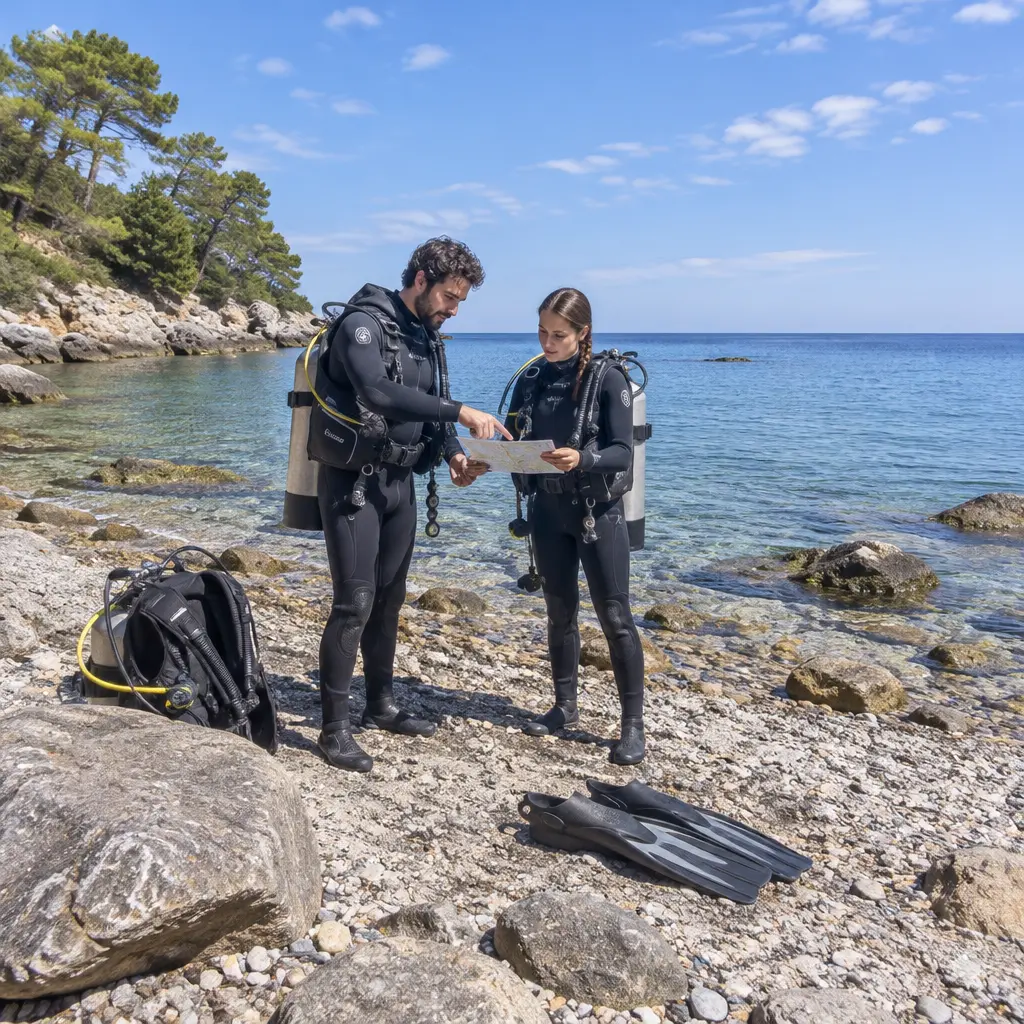
Entry-level scuba divers are newly certified divers learning to apply safe diving practices in open water. Five core skills—buoyancy control, mask clearing, regulator recovery, controlled ascents, and dive planning—help them manage equipment, conserve air, and respond calmly to common challenges. These skills matter because diving takes place in an environment where problems can escalate quickly: the Divers Alert Network (DAN) reported 188 recreational scuba-diving fatalities worldwide in 2022, while emphasizing that incidents often involve multiple contributing factors. The practices below reflect foundational training guidance from organizations such as PADI, DAN, and the National Oceanic and Atmospheric Administration (NOAA).
Why Entry-Level Diver Skills Support Safer Diving
A core diving skill is a repeatable technique that helps a diver maintain control, use equipment correctly, and make sound decisions underwater. Certification courses introduce these techniques in confined water and assess them in open water, but certification is a starting point rather than proof of readiness for every depth, condition, or dive site. Divers should stay within their training and experience, follow their instructor’s procedures, and dive with a qualified buddy.
The five skills work as a connected system. Buoyancy and breathing help manage position and air use; mask and regulator skills help preserve composure if equipment is displaced; and ascent control and planning reduce exposure to avoidable risks. For a simple visual summary, an article graphic could show these five skills as a pre-dive-to-ascent sequence, with buddy checks and communication spanning every stage.
Buoyancy Control as an Entry-Level Diver Skill
Buoyancy control is the ability to adjust a diver’s tendency to rise, sink, or remain suspended by coordinating breathing, exposure protection, weights, and the buoyancy-control device (BCD). PADI’s entry-level training teaches divers to establish neutral buoyancy and make small adjustments rather than continually inflating or venting the BCD. The goal is controlled movement—not hovering perfectly at all times.
Breathing and Neutral Buoyancy
Neutral buoyancy occurs when a diver neither rises nor sinks significantly. Because the lungs change volume with each breath, a slow inhalation can create a slight upward movement and an exhalation a slight downward movement. Divers should breathe continuously and normally; holding the breath during scuba diving can cause serious injury, especially during ascent, as pressure changes expand trapped gas.
Practice in calm, shallow water by adopting a horizontal position, relaxing the body, and making gradual breathing adjustments. Avoid using the BCD as a substitute for careful breathing or repeatedly adding and dumping large amounts of air.
Weighting, Trim, and Environmental Awareness
Correct weighting means carrying enough weight to control buoyancy while avoiding unnecessary ballast. Trim describes the diver’s orientation in the water; a stable, near-horizontal position can reduce effort and help prevent accidental contact with the seabed or fragile marine life. Suit thickness, cylinder type, salinity, and equipment configuration all affect weighting, so divers should check their setup with an instructor or experienced professional rather than copy another diver’s weights.
Mask Clearing and Regulator Recovery for Entry-Level Divers
Mask clearing and regulator recovery are equipment-management skills that let divers restore vision or breathing equipment without rushing to the surface. In training, divers learn each procedure under supervision, repeat it until it feels manageable, and use established signals to communicate with a buddy. Calm, deliberate action is the shared principle.
Mask Clearing
Mask clearing is the removal of water from a scuba mask while the diver remains underwater. The standard training method involves positioning the mask, looking slightly upward, and exhaling gently through the nose while creating a small opening at the lower edge of the mask. Exact technique can vary with mask design and course instruction.
A small amount of water entering a mask is common and is not, by itself, an emergency. Divers should practise first in shallow, controlled conditions and stop if anxiety or discomfort becomes difficult to manage. NOAA’s diving guidance stresses planning, appropriate training, and avoiding dives beyond a person’s ability or comfort level.
Regulator Recovery and Clearing
Regulator recovery means retrieving a second-stage regulator if it leaves the diver’s mouth; clearing means removing water from it before breathing normally. Entry-level courses teach a recovery method suited to the diver’s equipment and then a controlled clearing method, typically using the purge button or exhalation as instructed. Divers should continue breathing calmly from the regulator once it is recovered and cleared.
These techniques are most reliable when practised repeatedly with an instructor in a pool or other confined-water setting. If a diver cannot restore comfortable breathing, the appropriate response is to signal the buddy and follow the course-taught alternate-air procedure—not to improvise or make an uncontrolled ascent.
Controlled Ascents and Entry-Level Diver Safety
A controlled ascent is a gradual, monitored return toward the surface that follows the diver’s training, dive plan, and computer or depth-and-time limits. It includes monitoring depth and ascent rate, maintaining normal breathing, and completing any required safety stop when conditions and procedures allow. A safety stop is not a substitute for a safe ascent or for emergency training.
Ascent Rate, Monitoring, and Breathing
Divers should use their dive computer or training-approved method to monitor ascent and follow the most conservative applicable guidance. DAN recommends slow ascents and highlights the importance of avoiding rapid pressure changes; exact recommended rates and stop procedures can differ by training agency, computer, and dive profile. The practical rule for a new diver is to ascend under control, watch the depth display, and never hold the breath.
A buddy should remain close enough to assist, while the diver checks surroundings and maintains a clear path to the surface. Currents, overhead environments, boat traffic, and low visibility can change the risk substantially; divers should not enter conditions that exceed their training.
Safety Stops and Surface Procedures
A safety stop is a brief pause at a shallow depth near the end of a dive when appropriate to the dive plan and training. It provides an additional margin for many ordinary recreational profiles, but it does not eliminate decompression risk. Divers should complete stops only when they can do so safely and should follow their computer’s alerts and instructor guidance.
At the surface, divers should establish positive buoyancy, signal as needed, and follow the boat or shore team’s procedures. A controlled ascent is therefore not one isolated action: it begins with adequate planning and continues through a safe exit from the water.
Dive Planning as an Entry-Level Diver Skill
Dive planning is the process of agreeing on the dive’s conditions, limits, equipment, communication, and response plans before entering the water. NOAA and DAN both emphasize preparation and diving within training and experience. A plan should be shared with the buddy, understood by both divers, and adjusted or cancelled if conditions do not match expectations.
Pre-Dive Checks and Shared Limits
A pre-dive plan covers the intended site, maximum depth and time, gas-management limits, entry and exit points, environmental conditions, and signals. Divers should also check equipment together using their training agency’s buddy-check procedure. Agree on what to do if separated, low on air, uncomfortable, or facing a change in weather or current.
The most conservative diver’s limits should guide the team. New divers should not treat a computer’s maximum depth, a certification card, or a guide’s experience as permission to exceed their own ability.
Air Management and Changing Conditions
Air management means monitoring gas supply throughout the dive and ending the dive with a reserve consistent with the agreed plan and training. Consumption can change with exertion, stress, depth, water temperature, equipment, and individual physiology. Divers should check their pressure gauge regularly and tell their buddy promptly when reaching agreed air thresholds.
A real-world example is a shore dive where visibility or current worsens after entry. A sound plan gives the pair a pre-agreed way to shorten the dive, navigate to an alternate exit, or abort. The ability to end a dive early is a mark of good judgment, not failure.
How the Five Skills Work Together
These skills are most useful when applied together. Consider a diver whose mask shifts during a dive: maintaining buoyancy and breathing calmly creates time to clear it; staying with the buddy supports communication; and the dive plan helps the pair decide whether to continue or ascend. If they end the dive, controlled ascent procedures and air monitoring guide the return.
A useful practice routine is to revisit these skills in a supervised pool or refresher session before a trip, especially after a long break. DAN encourages divers to maintain their skills and seek additional training when moving into new environments or more demanding activities. Divers should consult qualified instructors and their certifying agency’s current materials for procedures specific to their training.
Conclusion: Five Core Skills Every Entry-Level Diver Should Master
Buoyancy control, mask clearing, regulator recovery, controlled ascents, and dive planning form a practical foundation for entry-level scuba diving. Together, they support calm equipment use, awareness of depth and air, and better decisions with a buddy. They cannot remove every hazard, but regular practice and conservative choices can help divers avoid preventable problems.
Before the next dive, review the plan, check equipment with a buddy, and practise any skill that feels uncertain with a qualified instructor. For further learning, consult current training-agency materials, NOAA diving guidance, and DAN’s diver-safety resources.
Sources: Divers Alert Network, 2022 Diving Fatalities Workshop Report, https://dan.org/safety-prevention/diver-safety/case-summaries/; Divers Alert Network, DAN Safety Tips, https://dan.org/safety-prevention/diver-safety/; NOAA Ocean Exploration, Diving Safety, https://oceanexplorer.noaa.gov/technology/diving/diving.html; PADI, Open Water Diver Course, https://www.padi.com/courses/open-water-diver.