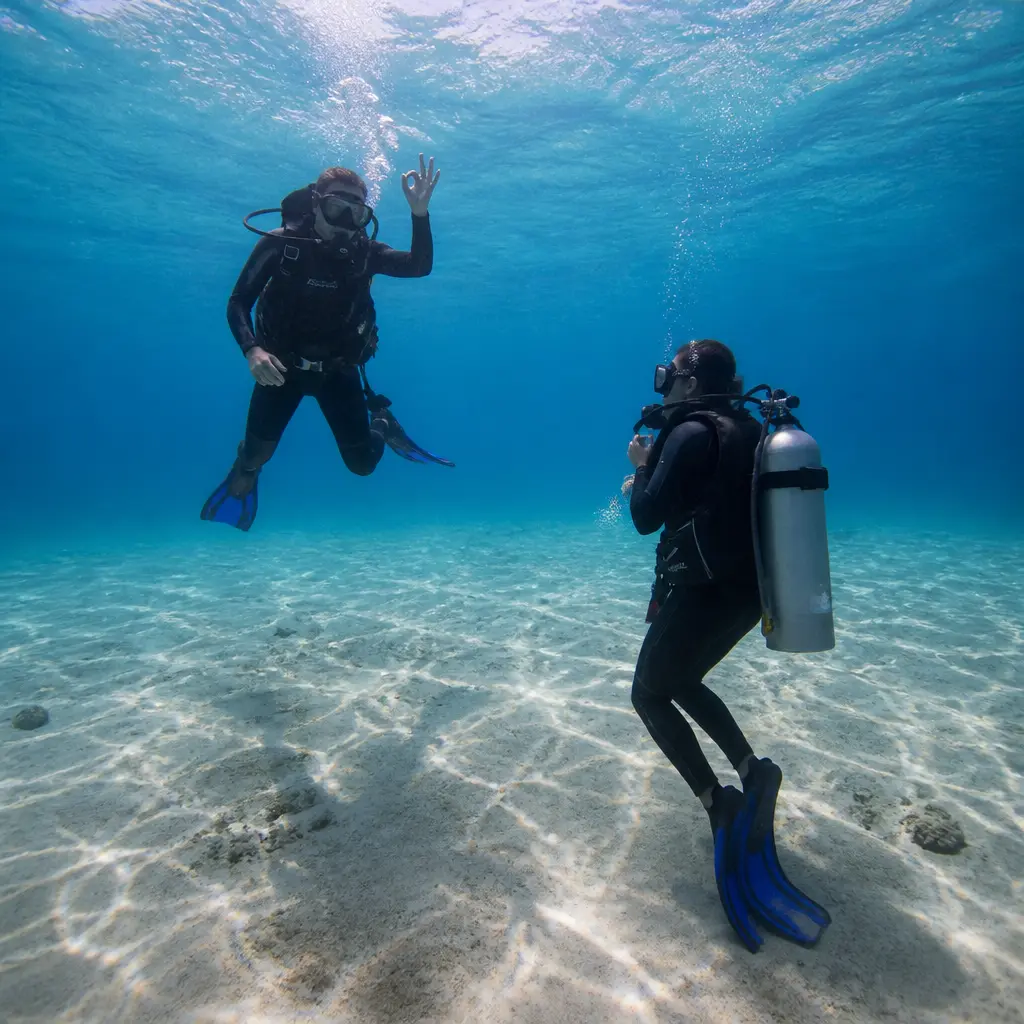
Scuba training mistakes are avoidable errors in preparation, practice, or course planning that can lead to extra lessons, repeat fees, delayed certification, or unsafe decisions underwater. The biggest time-and-money drains are often preventable: choosing a course that does not fit your schedule or learning needs, arriving unprepared, rushing skills, and neglecting equipment practice. The Professional Association of Diving Instructors (PADI) describes its certification process as performance-based, meaning students must demonstrate required skills rather than simply attend a set number of hours. Understanding course requirements, medical screening, skill practice, and gear costs helps divers train efficiently without treating safety as a shortcut.
Course planning mistakes that cost scuba students time and money
Course planning means matching a training program, schedule, and learning format to a student’s experience and circumstances. PADI and Scuba Schools International (SSI) both describe entry-level certification as a combination of knowledge development, confined-water practice, and open-water training. The exact structure, schedule, and costs vary by agency and dive center, so confirming what is included before paying is essential.
Choosing a course by price alone
A low advertised price may exclude items such as equipment rental, learning materials, pool or facility fees, certification processing, or open-water trip costs. These exclusions can turn an apparently inexpensive course into a more costly one. Ask for an itemized total and clarify the center’s policy on missed sessions, extra instruction, and rescheduling before enrolling.
Compare the full package, not just the headline price. Check whether the instructor provides adequate time for individual coaching and whether the course includes the training dives and equipment you need. A smaller class or a course with flexible practice sessions may cost more upfront but reduce the likelihood of paying for additional instruction later.
Misjudging the schedule and learning format
Scuba courses commonly divide learning among independent study, confined-water sessions, and open-water dives. Online theory can make classroom scheduling more flexible, but it does not replace in-water practice or the required demonstrations of competence. Students who book travel immediately after a tightly scheduled course may have little room to recover from bad weather, illness, or a skill that needs more practice.
Before booking, ask how many sessions are planned, what happens if conditions disrupt a dive, and whether any training can be completed locally before travel. Build in a buffer rather than assuming every session will proceed exactly as scheduled.
Skipping the medical questionnaire
Medical screening is an early safety and planning step, not paperwork to leave until the first pool day. The Recreational Scuba Training Council’s medical screening guidance uses a questionnaire to identify conditions that may require consultation with a physician before diving. A “yes” answer does not automatically mean a person cannot dive, but it can mean that medical advice or further evaluation is needed.
Completing the questionnaire honestly and early can prevent a last-minute pause after course fees, travel, or equipment arrangements have been made. Students should follow the current form and advice of a qualified clinician rather than relying on informal assurances from friends or an instructor.
Skill practice mistakes that delay scuba certification
Skill practice is the repeated, coached demonstration of diving tasks until a student can perform them to the course standard. PADI’s training materials emphasize demonstrated mastery of required skills; attendance alone is not proof of readiness. Students who treat practice as a test to pass once may spend more time repeating skills later, while those who identify difficulties early can ask for focused coaching.
Rushing skills instead of building comfort
Mask clearing, regulator recovery, buoyancy control, and controlled ascents are examples of foundational skills practiced during entry-level training. Trying to rush through them can make a student tense, use more air, or lose control of position. If a skill feels difficult, tell the instructor and request a slower demonstration or additional practice rather than concealing uncertainty.
A useful approach is to practice each task in manageable steps: understand the sequence, watch a demonstration, try it with supervision, and repeat until it feels controlled. This is not a guarantee that extra sessions will be unnecessary, but it makes instruction more targeted and supports safer performance.
Ignoring buoyancy and trim fundamentals
Buoyancy is a diver’s control of rising, sinking, or maintaining depth; trim is the diver’s body position in the water. Poor weighting or an unstable body position can make basic exercises harder and increase effort. The National Oceanic and Atmospheric Administration (NOAA) advises divers to maintain buoyancy control and avoid contact with the bottom and fragile marine life.
Ask the instructor to check weighting and equipment configuration in the water, because a number copied from another diver or another exposure suit may not suit you. Practicing neutral buoyancy and horizontal positioning can make later skills and dives more controlled, while protecting the environment.
Failing to communicate discomfort or learning needs
Communication is part of effective training. Cold, anxiety, water in the mask, equalization difficulty, or confusion about an instruction can interfere with learning and performance. Students should signal concerns promptly and ask for a pause when needed. Instructors can then adjust the pace, explain a skill differently, or address a practical issue before it becomes a repeated problem.
The Divers Alert Network (DAN) advises divers to take health and safety concerns seriously and to avoid diving when unwell or unable to participate safely. A postponed session can be frustrating, but pushing through a problem may create greater safety risks and additional costs if training must later be repeated.
Equipment and travel mistakes that create repeat expenses
Equipment planning includes choosing, fitting, and understanding the gear used in training. Divers do not need to buy a complete kit before certification, but they do need to know what is included, what must be rented, and how to use the equipment provided. Poor fit or unfamiliarity can distract from learning and prompt avoidable purchases.
Buying gear before knowing what fits
New students sometimes purchase a mask, fins, exposure suit, or buoyancy compensator before trying appropriate options. Fit and local conditions matter: a mask must seal comfortably, and thermal protection should match the water and duration of the dive. Ask the instructor or dive center what equipment is supplied and try rental options before making major purchases.
A sensible order is to complete initial training with suitable rental or school equipment, learn personal preferences, then buy items that fit well and are appropriate for the diving you plan to do. This reduces the chance of paying for gear that is uncomfortable, unsuitable, or rarely used.
Arriving without practicing equipment setup
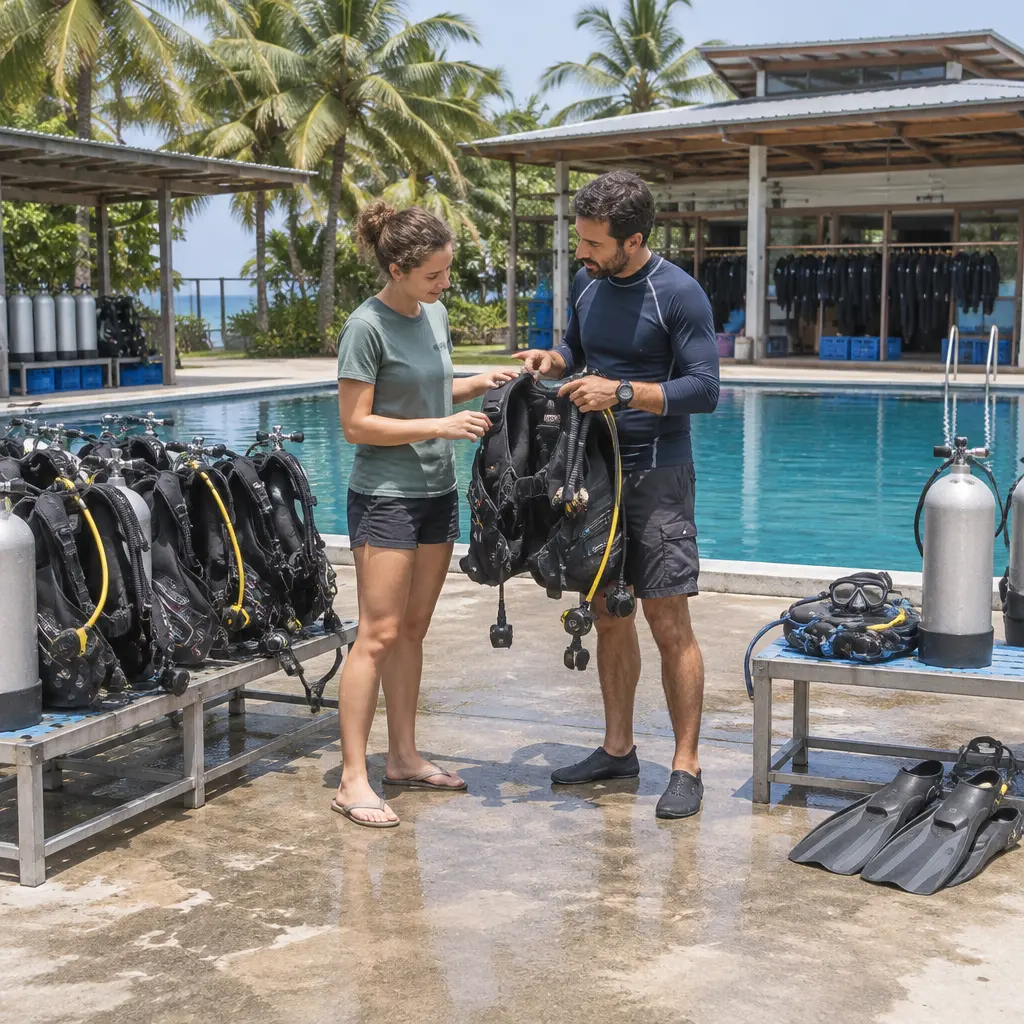
Equipment setup is the process of assembling and checking scuba gear before entering the water. Students who leave all setup to the instructor may lose valuable practice time and feel less confident during later sessions. Under supervision, learn the function of each component, how it is assembled, and how to conduct the center’s pre-dive checks.
Do not improvise repairs or use unfamiliar equipment without instruction. If you are uncertain about a connection, fit, or check, stop and ask a qualified professional. Familiarity supports smoother training, but safe handling takes priority over speed.
Overlooking travel logistics and dive timing
Travel can add costs when students fail to account for transport to dive sites, overnight stays, weather delays, or the possibility of completing training on a later date. Recreational diving guidance also cautions against flying too soon after diving. DAN’s flying-after-diving guidance commonly advises waiting at least 12 hours after a single no-decompression dive and 18 hours after multiple dives or multiple days of diving; longer waits may be appropriate, and divers should follow current guidance and their dive professional’s advice.
Do not schedule a flight immediately after a training dive simply to save a hotel night. Confirm the dive plan, the final dive time, and the recommended surface interval before booking onward travel. A buffer can prevent costly changes and reduce avoidable risk.
A practical checklist for avoiding scuba training setbacks
A short checklist helps turn the most common training problems into manageable decisions before they become missed sessions or repeat expenses.
- Compare course inclusions and ask for the full expected cost in writing.
- Complete the medical questionnaire early and seek appropriate medical advice when indicated.
- Confirm the schedule, weather or cancellation policy, and options for additional practice.
- Arrive rested, communicate discomfort, and ask questions as soon as something is unclear.
- Practice foundational skills patiently and request feedback on buoyancy, trim, and weighting.
- Try rental gear before buying expensive equipment, and learn setup under supervision.
- Plan travel with enough flexibility for training changes and post-dive flying guidance.
For example, a student who checks medical requirements, course inclusions, and travel timing before booking can identify a needed physician consultation or an extra training day while changes are still manageable. This illustrates why preparation is not merely administrative: it protects both the training budget and the student’s ability to complete skills safely.
Conclusion: Better preparation makes scuba training more efficient
Scuba training mistakes that cost time and money usually begin with preventable planning gaps: unclear course fees, unrealistic schedules, delayed medical screening, rushed skill practice, unfamiliar equipment, or poorly timed travel. Course planning, patient skill development, and sensible equipment preparation work together to reduce avoidable setbacks. Certification is based on demonstrated competence, not simply finishing quickly, so safety should never be traded for speed.
Before enrolling, ask a recognized dive center for a complete cost breakdown, read the current medical screening form, and discuss your schedule and learning needs with the instructor. For further guidance, consult the training agency, NOAA, and DAN resources relevant to your course and planned diving.
Sources: Professional Association of Diving Instructors (PADI), Open Water Diver Course and training information, https://www.padi.com/courses/open-water-diver; Scuba Schools International (SSI), Open Water Diver program, https://www.divessi.com/en/advanced-training/scuba-diving/open-water-diver; Recreational Scuba Training Council (RSTC), Diver Medical Participant Questionnaire and guidance, https://wrstc.com/medical/; National Oceanic and Atmospheric Administration (NOAA), Diving Safety, https://oceanservice.noaa.gov/education/tutorial_corals/coral10_reefs.html; Divers Alert Network (DAN), Flying After Diving, https://dan.org/health-medicine/health-resources/diseases-conditions/flying-after-diving/; Divers Alert Network (DAN), Health and Safety Resources, https://dan.org/health-medicine/health-resources/