Scuba Diving Skills: The Hidden Foundations of a Relaxed Dive
A relaxed scuba dive is the result of practiced skills—not simply calm water or an easy route. Buoyancy control, efficient breathing, trim, situational awareness, and thoughtful planning work together to reduce effort and help divers respond to changing conditions. The Divers Alert Network (DAN) emphasizes that preparation, training, and conservative decisions are central to safer diving; meanwhile, research on breathing and exertion helps explain why small improvements in technique can make a dive feel noticeably easier. Understanding these connected skills can help divers conserve energy, protect the underwater environment, and recognize when conditions call for a change of plan.
Build Relaxation Through Buoyancy Control
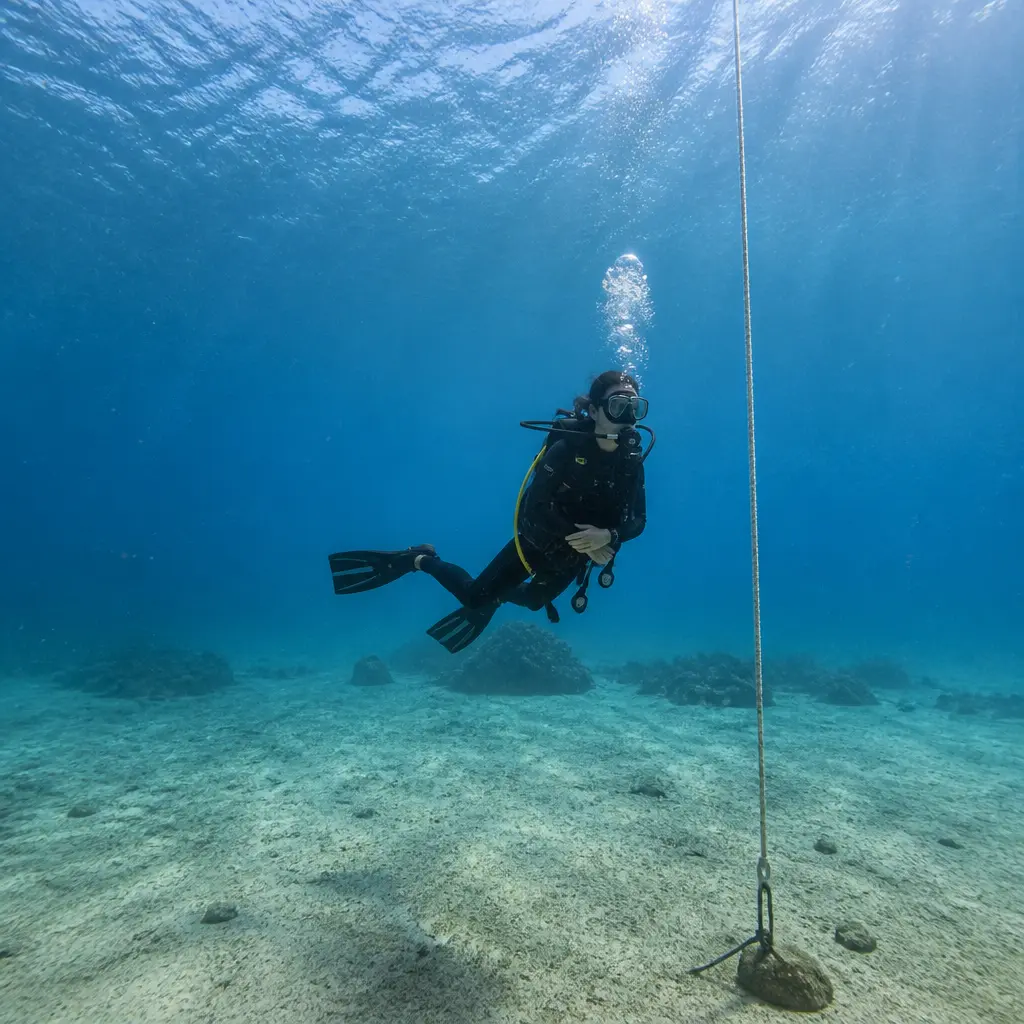
Buoyancy control is the ability to adjust a diver’s tendency to rise, sink, or remain at a chosen depth through appropriate weighting, breathing, and buoyancy-compensator use. PADI describes buoyancy control as a core diving skill because it supports stable depth, reduces unnecessary finning, and helps divers avoid contact with the bottom. It is not a single maneuver: it combines correct equipment setup with small, deliberate adjustments and ongoing awareness.
Weighting and buoyancy-compensator adjustments
Correct weighting allows a diver to descend and maintain depth without carrying excess lead or fighting persistent positive buoyancy. A buoyancy compensator (BC), also called a buoyancy-control device (BCD), adds or releases gas to manage larger changes in buoyancy. Divers should make adjustments gradually and follow training on weighting checks, especially when changing exposure suits, cylinders, or other equipment. Too much weight can increase the amount of gas needed in the BC and make precise control harder; too little can make a controlled descent difficult.
Breath-led depth changes
The lungs provide fine buoyancy adjustments: inhaling tends to increase buoyancy, while exhaling tends to decrease it. This is different from using breath-holding to control depth. DAN advises divers not to hold their breath during scuba diving, because expanding gas during ascent can cause serious lung overexpansion injury. A calm, continuous breathing pattern allows small depth changes while preserving the essential safety habit of breathing continuously.
Once buoyancy is steady, the next hidden skill is arranging the body and equipment so that stable depth does not require constant correction.
Improve Relaxation Through Trim and Finning
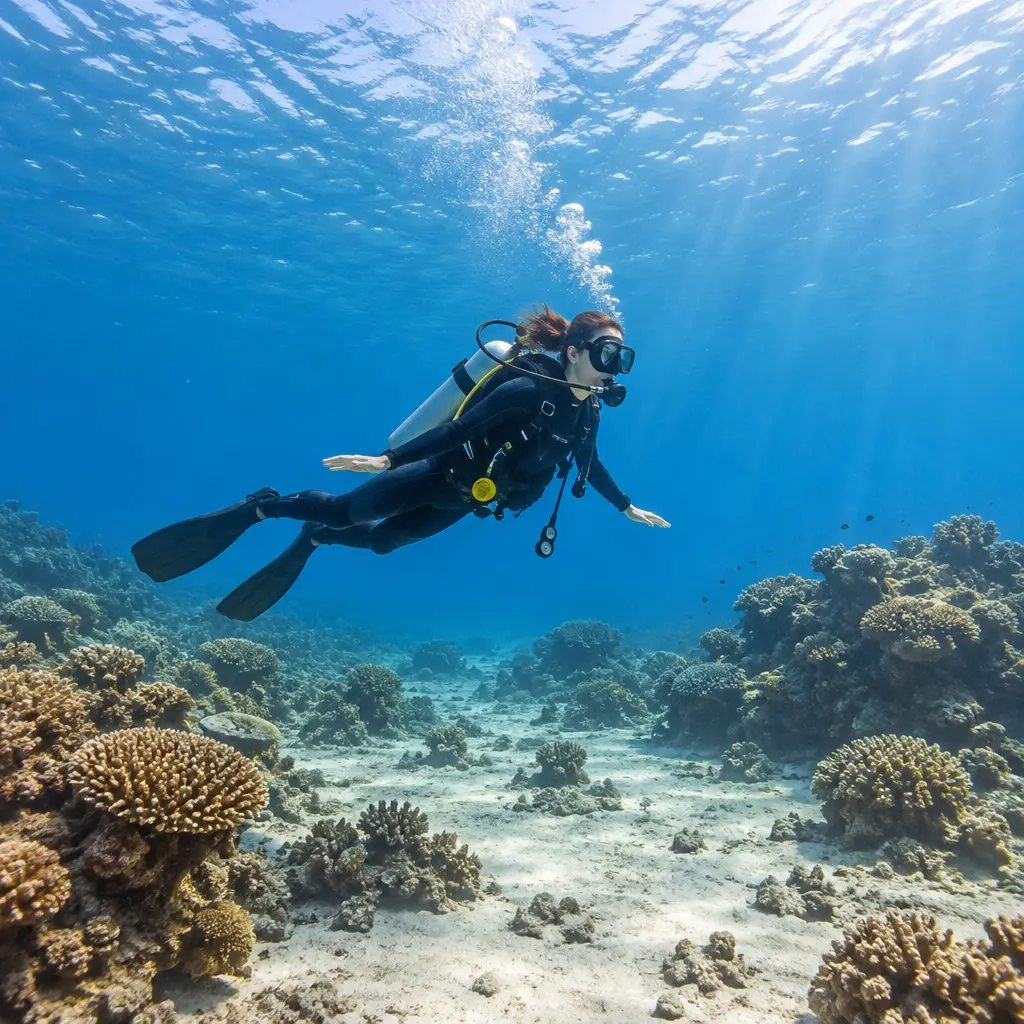
Trim is a diver’s orientation in the water, especially the balance between head and feet. Good trim helps a diver remain level and move with less effort. PADI’s buoyancy training treats body position and controlled movement as key components of underwater control. Trim depends on more than strength: cylinder position, weights, exposure protection, and equipment placement can all affect balance.
Horizontal position and equipment balance
A stable, nearly horizontal position can reduce drag and make it easier to keep fins clear of the seabed. If a diver’s feet sink or rise, small changes to equipment placement or weighting may help, but adjustments should be made methodically and within training limits. Divers should avoid compensating for poor trim by adding excessive weight or making large, frequent BC changes. A qualified instructor can help identify whether the cause is technique, equipment configuration, or both.
Controlled kicks and environmental protection
Finning is the use of fins to propel and maneuver underwater. Slow, controlled kicks can reduce unnecessary exertion and help prevent accidental contact with coral, sediment, or other habitat. DAN’s guidance on responsible diving and environmental awareness supports maintaining distance from fragile features and controlling movement rather than using the reef or bottom for support. Conditions matter: current, visibility, and the diver’s experience can change which kick or route is appropriate.
Efficient movement helps conserve energy, but relaxation also depends on what divers do with their breathing and attention when the dive becomes demanding.
Support Relaxation Through Breathing and Awareness
Breathing and situational awareness are linked skills: a diver who notices rising effort, changing conditions, or discomfort early can respond before stress escalates. DAN’s safety resources advise divers to monitor themselves and their buddy, communicate concerns, and end or modify a dive when needed. There is no single breathing rate that guarantees a relaxed dive; breathing varies with workload, depth, temperature, fitness, equipment, and individual physiology.
Steady breathing without breath-holding
A steady, continuous breathing rhythm can help divers avoid rushing and notice changes in exertion. Divers should not deliberately restrict breathing, skip breaths, or use breath-holding as a way to conserve gas. If breathing becomes unusually difficult, the appropriate response is to signal a buddy, reduce effort if safe, and follow training and the dive plan—not to force a slower rate. DAN notes that breathing difficulty underwater may have multiple causes, including exertion, equipment problems, or medical issues, and deserves prompt attention.
Situational awareness and buddy communication
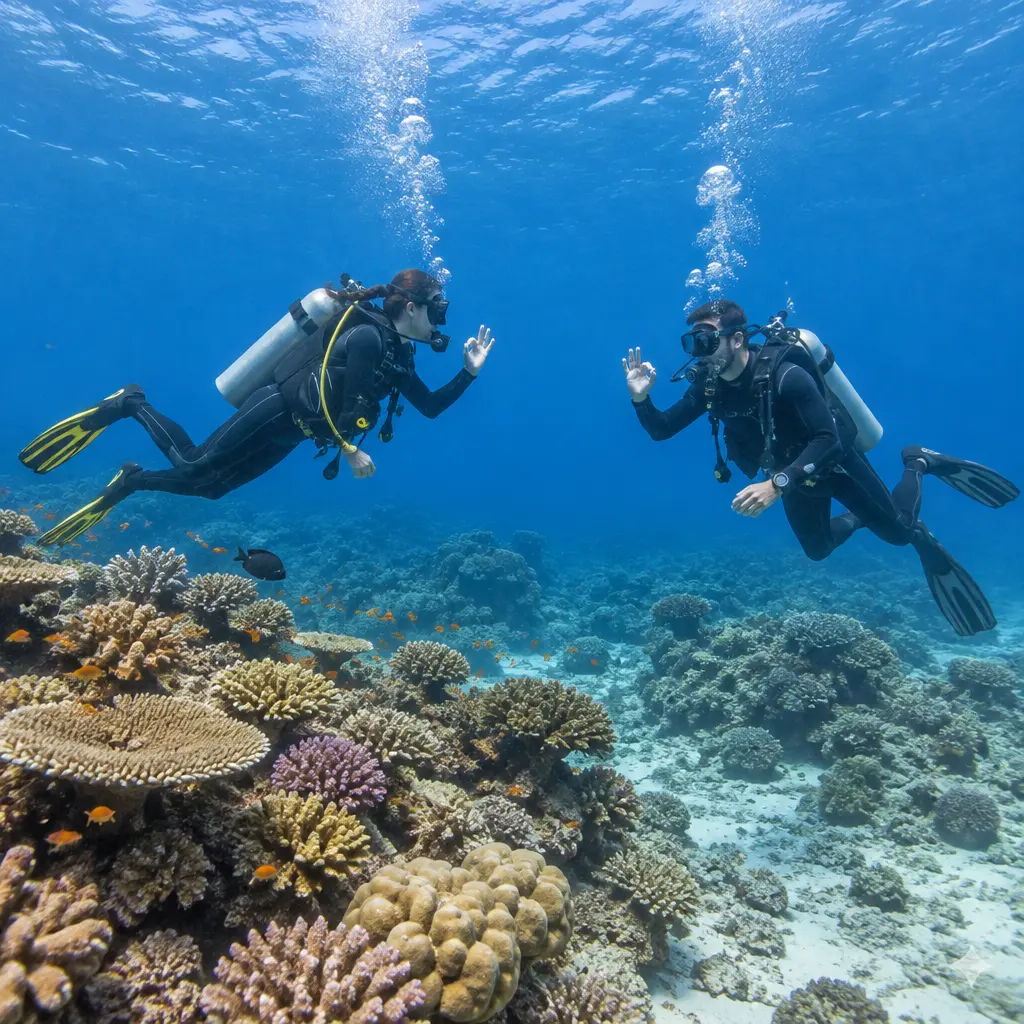
Situational awareness means tracking relevant information such as depth, remaining gas, location, current, visibility, and the buddy’s condition. Divers should agree on communication signals and turn pressures before entering the water, then check in during the dive. The U.S. Navy Diving Manual and recreational training agencies alike emphasize planning, monitoring, and disciplined procedures, though recreational divers should follow their own certification agency’s standards and the specific dive plan. A diver who feels anxious or overloaded can signal the buddy and pause in a safe place rather than silently pressing on.
Awareness is strongest when it begins before descent, making planning the bridge between individual technique and a well-managed dive.
Prepare for Relaxation Through Dive Planning
Dive planning is the process of assessing conditions, agreeing on limits and procedures, and preparing equipment before entering the water. DAN recommends conservative choices and attention to factors such as training, experience, health, environmental conditions, and available support. A plan does not remove uncertainty; it gives divers shared criteria for responding to it.
Conditions, limits, and contingency decisions
A useful plan considers the site, entry and exit, depth, expected current, visibility, gas management, and what to do if buddies become separated or conditions worsen. The plan should remain within each diver’s training and experience. The National Oceanic and Atmospheric Administration (NOAA) describes how pressure increases with depth; this is one reason divers must plan depth and gas use carefully rather than treating a dive as an open-ended swim. If weather, current, visibility, or a diver’s condition differs from expectations, postponing or ending the dive is a valid safety decision.
Equipment checks and a real-world lesson
A pre-dive equipment check is a systematic confirmation that essential gear is present, functional, and understood by the buddy team. Divers commonly use a structured buddy check to review items such as the BC, weights, releases, air supply, and final checks, following their training agency’s method. The U.S. Coast Guard’s recreational boating safety materials underscore the broader value of preparation and reliable safety equipment in aquatic activities; for scuba, the practical lesson is to identify problems on shore or at the surface rather than discovering them at depth. A leaking connection, unfamiliar release, or missing accessory can add stress that good planning might prevent.
Together, these habits turn relaxation from a vague feeling into a set of observable practices that divers can rehearse and improve.
Conclusion: Relaxed Diving Is a Trainable Skill
Buoyancy control helps divers hold depth with small, safe adjustments; trim and efficient finning reduce unnecessary effort and environmental contact; steady breathing and awareness make it easier to recognize changing needs; and planning gives buddies shared limits and options. None of these skills replaces formal training, sound equipment, or conservative judgment. Divers can build them through supervised practice, thoughtful debriefs, and refresher training—then choose conditions that match their experience. For further learning, consult a recognized training agency and DAN’s current diver-safety guidance, and ask a qualified instructor to review buoyancy, trim, and emergency procedures.
Sources: Divers Alert Network, “Diving Safety,” https://dan.org/safety-prevention/; Divers Alert Network, “Breathing Underwater,” https://dan.org/health-medicine/health-resources/diseases-conditions/breathing-underwater/; PADI, “Peak Performance Buoyancy,” https://www.padi.com/courses/peak-performance-buoyancy; National Oceanic and Atmospheric Administration, “What is pressure?” https://oceanservice.noaa.gov/facts/pressure.html; U.S. Navy, U.S. Navy Diving Manual, https://www.navsea.navy.mil/Home/SUPSALV/00C3-Diving/; U.S. Coast Guard, “Recreational Boating Safety,” https://www.uscgboating.org/